Wednesday, 4 March 2026
How to Make a Killing (2026, dir. John Patton Ford)
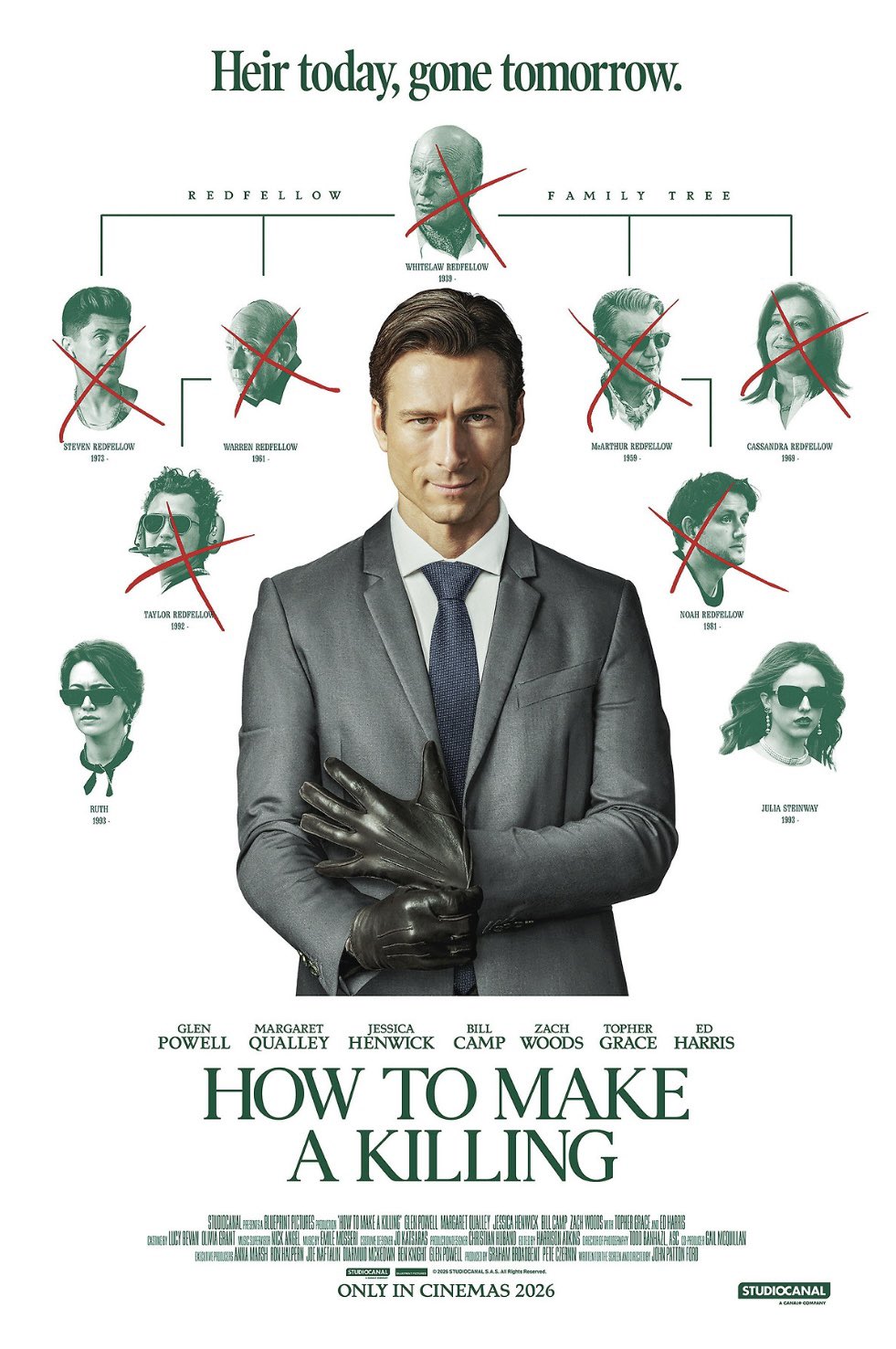
Strangely enough, How to Make a Killing felt like a nice palate cleanser. In a month of ups-and-downs in the films I’m watching, this was solid middle ground. It’s a fine movie; I enjoyed watching it. The film follows Becket Redfellow (Glen Powell), raised by his mother after she was disowned by her wealthy family, to believe in his owed inheritance. Prompted by a run-in with an old friend and some troubles at work, Becket begins to kill off the family in line for the Redfellow fortune before him. At the same time, he connects with his uncle Warren (Bill Camp), starts a relationship with his cousin’s girlfriend Ruth (Jessica Henwick), and dodges the blackmail attempts of his childhood friend and unhappy bride Julia Steinway (Margaret Qualley).
The concept is pretty simple and the execution more so—the premise fits on the poster, a marketing style that prefers minimalism in a style true to the film. This is illustrated quite apparently in a comment made my Becket mentioning the big personalities in his family, compared to the demonstrably small impact they have in the film. Sure, the audience is privy to a couple eccentric figures, but their scenes are almost entirely contained in their deaths and funerals (the latter identical between them all). Personally, I prefer this. I’ve touched on my disdain for bland wealthy characters who exist only to be killed, but keeping the audience at a distance from them focused on Becket and his storylines with Ruth and Julia. It possibly would’ve strengthened the film to add tension to Becket’s murder spree by adding consequence to his murders, but I want to offer an alternative reading of the film. In this view, Becket’s distance from his family and thus the fallout of his actions in pursuit of wealth mimics the process of amassing tens of billions of dollars.
The film is narrated throughout as Becket tells his story to a death row priest—a trite framing device that adds little save for a turn at the end, although Powell’s narration is on the better end of the spectrum of voice-over quality. It’s pretty standard in tone and content compared to other crime thrillers, but muted, desaturated; crime thriller lite, if you will. The note I wrote down during the film and describes the issue well is that it lacks punch. It’s how I described it at the start: a palate cleanser after bold, memorable films I felt all different ways about. The most exciting moment in this movie was a specific effect of a gunshot at a chandelier—a satisfying effect, no doubt, but all that really stood out.
Monday, 2 March 2026
Send Help (2026, dir. Sam Raimi)
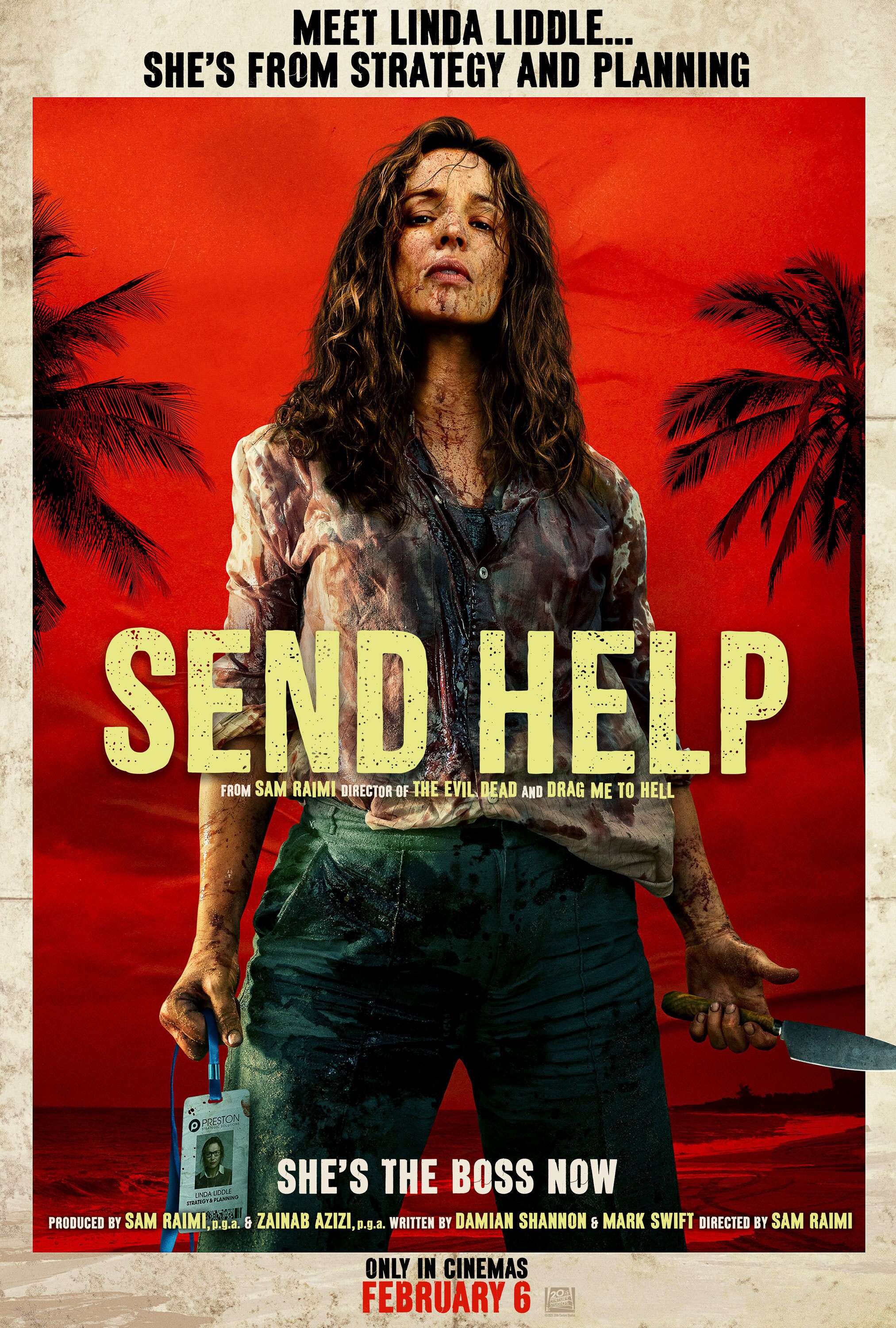
Send Help is a chimera of a movie. It’s the characters and tone of an (occasionally sinister) office romcom in the setting of a castaway adventure experiencing the CGI gore of an early-2000s children’s horror with the music of a family fantasy and this tamely experimental cinematography. The quality I highlight here is not a failing of coherence but a hesitation to commit to being a horror movie.
The film has corporate employee Linda Liddle (Rachel McAdams) and her new boss, who since receiving the position been rude and passed her up for a promotion, Bradley Preston (Dylan O’Brien) stranded on an island off the coast of Thailand. Linda keeps the injured Bradley alive, but slowly develops a situational control over him that culminates first in her resistance to their being rescued and later in violence between them.
There’s an uncanniness to the execution that’s only partially disorienting as the cultural touchstones of genre it uses are pretty straightforward. Plus, it’s funny and McAdams and O’Brien are both fun to watch—even if I never quite believed their cruelty was anything more than a momentary affectation, rather than something stemming from the characters’ identities, pasts, or situations.
There are a lot of notes I wrote down for this film lending to more cogent analysis of its qualities: the significant of rejecting rescue in fictional survival scenarios and (potential) audience need for their suspension of disbelief to be cradled by the head, or Linda’s physical and sensual transformation and moments where it’s used for horror in a neat way, or the omnipresence of sexual violence that’s so talked around it’s notable. But I wasn’t interested enough in the film to feel compelled to actually flesh out these thoughts into arguments. I had a fun time watching it, even when it was compiled from a predictable set of films once I started searching up past credits of some of the people who worked on it. It was just sort of middling, but in the enjoyable way.
Sunday, 1 March 2026
Good Luck, Have Fun, Don’t Die (2025, dir. Gore Verbinski)
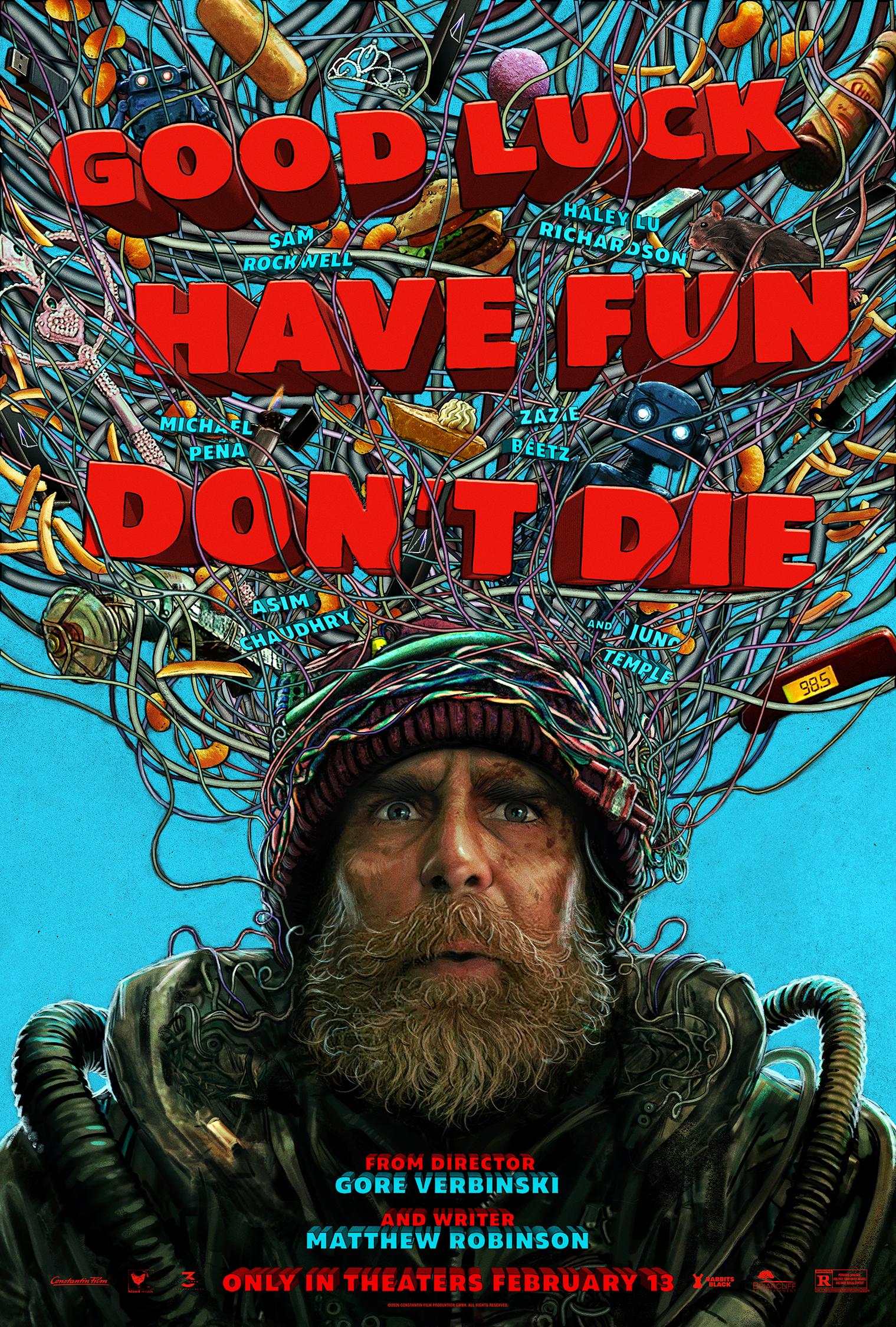
Good Luck, Have Fun, Don’t Die (a title I’ve copy-and-pasted several times now to avoid typing it) presents a fairly straightforward science fiction premise but promises a funny, energetic execution. It absolutely delivers on this. When a time-traveling man from the future (Sam Rockwell) appears in a Los Angeles diner in the late hours of the night, seven customers (Asim Chaudhry, Daniel Barnett, Georgia Goodman, Michael Peña, Zazie Beetz, Juno Temple, and Haley Lu Richardson) join him in an attempt to stop the end of the world.
The movie mainly takes place over the course of one hour, though the action and tension of these scenes cuts frequently to flashbacks of the different characters’ recent (or sometimes more distant) past, each speaking to at least one of the different issues this film discusses. Despite the tonal differences between these parts, the pace is consistently fast and funny, making that (over) two hour run time fly by. One element I really enjoyed was that the man from the future is going through a time loop, but the movie we watch is about the people involved in his 117th attempt to stop the apocalypse.
Primarily, the movie is about humans’ relationship to technology (and most prominently AI), but takes a surprisingly various approach to it, showing different angles and speculative interpretations of a specific set of modern issues. It’s dryly humorous about these in a way that mimics the sort of mild acceptance when you’re constantly overwhelmed with disaster and grief—a choice I’d argue makes the film accessible and unambiguous without making the audience feel talked down to. At times I worried it was doing too much, but it has a way of focusing the stakes and arranging its ideas into a hierarchy of attention and use.
This variety of topics is true to the maximalist approach the film promises: the cool shots, the cluttered costumes, the zany performances (especially from Rockwell), and, at its weakest, the utter onslaught of homage. I am pretty notorious about not liking my speculative elements to overlap, but the nature of this film allows, briefly, an exception. That said, my goodwill eventually wore off. At times this film relied too heavily on its love for science fiction and fantasy that it lacked its own voice—a real disappointment, as it truly was doing something cool. It was pop culture reference after pop culture reference and there are other moments (and characters, designs, etc.) that I have to assume were just references I didn’t recognize, based on their framing. Much of this culminates in the climax, the first major beat of it plucked straight from Ghostbusters, but don’t worry: the characters argued about it for so long that you really understood what they were getting at long before their Stay Puft Marshmallow Man appeared.
This is a solid film: it’s exciting, it’s funny, it balances cheese and sincerity well. But it never managed to be as clever as I wanted and at times it allowed itself to dip into the generic, a fact only exacerbated by explicit references to what compiles the generic. I found that an important realization while watching: that the reason it felt like it lacked originality when it clearly didn’t, was that it called out to the very things it was building on with utmost accuracy and gravity. The impulse makes sense, and I’d guess ties to the film’s accessibility with regards to its dry treatment of social commentary, but it ended up being just slightly lackluster.
Friday, 27 February 2026
Eternity (2025, dir. David Freyne)

The trappings of this movie are: the afterlife is bureaucratic in the way of the liminality of transportation and vacation, there lacks a true suspense over the love triangle due to the nature of the premise, there is an emphasis on the artificial and the legitimate. All right, it might be described as cheesy or a complementary sort of saccharine—but it’s the fun and usually charming structure of romantic comedy where the couple is already together at the start of the movie.
Eternity presents an afterlife of, as the title suggests, eternities: a single chance to choose the place you want to spend eternity. It’s easiest to explain like this: after Joan (Elizabeth Olsen, earlier Berry Buckley) dies, she is confronted by the choice of spending eternity with her husband of six decades Larry (Miles Teller, earlier Barry Primus) or her first husband who died young Luke (Callum Turner). This is how the marketing does it and it’s accurate, but it leaves out that the movie is primarily from Larry’s point of view.
The movie plays out about how you’d expect, but it does so with fun worldbuilding and solid jokes. The mundanity of the afterlife is complicated with humor baked into the sets and a deliberate artificiality to the “Junction.” It breathes life (pun intended) into a concept that otherwise evokes other media with comparable concepts. In terms of the predictability, it occasionally leaned too much on the audience’s attention for genre tropes. The love triangle was underdeveloped, which undermined its tension but ultimately felt true to the conclusion of the film. At times, events seem contrived without the characters propelling the choices, despite the strength, attributable to the performances.
So, yes, the movie is sweet and charming, but I really appreciated the grace it gave Joan, even as it caused conflicted feelings in Larry and Luke. In particular, the use of friendships allowed for Joan to explore her feelings and for Larry and Luke to have some much needed complexity in their relationship. Naturally this contributed to the sentimental feeling, but I didn’t mind it.
Thursday, 26 February 2026
Atonement (2007, dir. Joe Wright)
[Content warning for rape; it is not discussed in detail in this review, but it is a major plot point in the film. As always, this review includes spoilers, though they are pretty specific here.]
This film has been on my list for a while but it was pretty quickly vaulted to the top of my list when I saw its esteemed costumer Jacqueline Durran worked very recently on the controversial new release, Emerald Fennell’s “Wuthering Heights”. Obviously I have opinions of the costumes I’d seen from that film, but to know one of the major creative minds behind it was Durran—so revered for much of her work, but famously for the iconic green dress in this film—piqued my interest.
So, the costumes in Atonement are stunning. They place the audience immediately in this context of the 1930s but a bit fantastic. We begin the film on a single day and night in 1935 at the Tallis family’s home, during which we meet the main cast of characters and see their dynamics that will take us through the rest of the film. There are the Tallis siblings, the imaginative writer Briony (Saoirse Ronan, later Romola Garai and Vanessa Redgrave), the lovestruck Cecilia (Keira Knightley), and the eldest visiting Leon (Patrick Kennedy); their cousins staying with them, Lola Quincey (Juno Temple) and her two younger brothers; Leon’s visiting friend Paul Marshall (Benedict Cumberbatch); and the son of the Tallis’ housekeeper and Cecilia’s lover, Robbie Turner (James McAvoy). At the end of the night, something awful happens as the young girl staying with the family is raped by an unknown person; Briony, mind preoccupied by his affair with her sister, reports Robbie to the police.
This point in the film is notably stylistic. The costumes are stunning, with mainly-monochromatic color palettes and stunning silhouettes. My favorites were actually the swimsuits with their little caps. I mean, Keira Knightley could probably make most things look good, but they come across as so whimsical and out of time to our modern eye (despite being by their nature timely, but there’s a goofiness to old swimming costumes that can be difficult to wrap our heads around, a trait I personally adore). The editing and sequence of events create this time-warping effect, where minimal details like small noises are massive and we see scenes multiple times from different angles. This is complemented by punchy dialogue and a barreling forward sense of culmination. The entire beginning part of the film evokes a hot British summer day with remarkable precision and sets up these dynamics quickly and skillfully.
Once the night ends, there is a time shift to four years later, where we follow Robbie during his experience in the second World War after being drafted from prison. This then shifts to Briony’s (Romola Garai) perspective during the war as she works as a nurse, atoning for falsely accusing Robbie four years ago, before attempting to make amends with Cecilia and Robbie. After the first shift, the film makes a huge change in its style. I won’t pretend to have much expertise watching war films, but it felt surprisingly generic in contrast to the first part of the movie. The stylistic elements—the costumes, the sound and chronological editing, the dialogue and performances—were still present, but reduced to barely notable. I am sure this works for some people, but it is just not my kind of thing at all.
The way I’m describing this, similar to my thought process at the time, I think implies this is a commentary on war and the limited ways to portray it. But this idea is undermined by the final shift and reveal, that the movie has been Briony (Vanessa Redgrave), now a famous novelist, atoning for her actions in the first part of the movie and giving her sister and Robbie, deceased during the war, the happy ending they never got. I’ll ignore whether or not I found this a satisfying reason within the universe of the film, because it certainly was not outside of it. It explained why the style of the movie changed so drastically, but did little to defend it or give it thematic reasoning. It also did not make up for the feeling that this was several separate films tied together, one of which I liked more than the others. Perhaps it was a bit of a lose-lose situation, where the film’s shifts were explained in a lackluster way, and the reveal explained a choice I didn’t like in the first place.
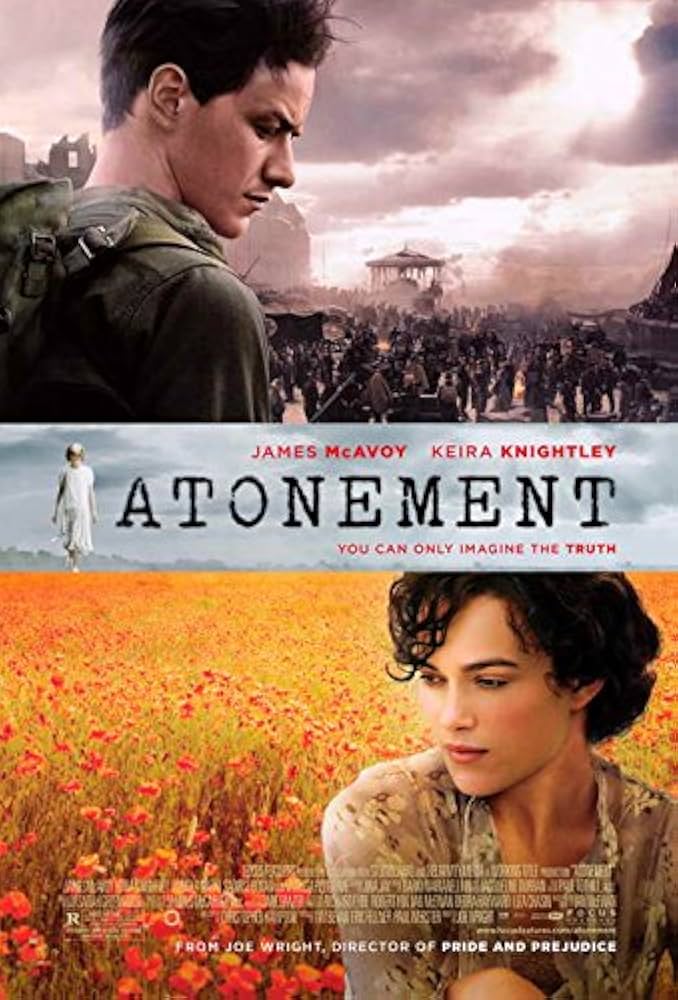
Ultimately, I wanted this to be a different movie: the one we saw in the first hour or so. I maintain that the reveals didn’t work as intended, but at the end of the day, my real problem was a taste one. That said, respectfully, the poster for this movie does it a huge disservice: it's beautiful throughout.
Wednesday, 25 February 2026
Crime 101 (2026, dir. Bart Layton)
I imagine, if you skim over the titles of films I’m releasing reviews for this month, it will become clear that I have been spending a lot of time at the cinema lately. There are so many movies I want to see right now, so I finally caved and bought a membership to my local theater. This also means I’ve been forcing pretty much everyone I know near me to see movies with me. Sometimes that means seeing a movie I normally wouldn’t, including this.
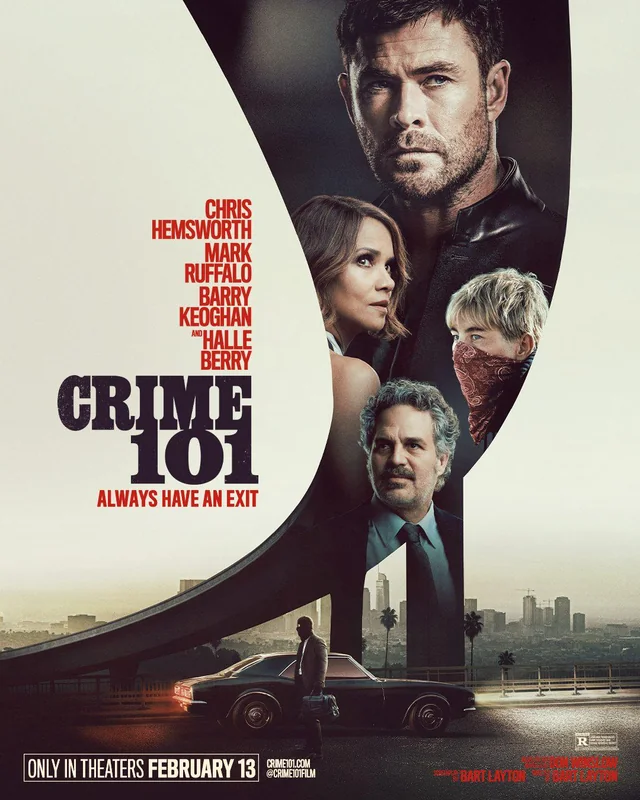
Crime 101 is definitely the sort of movie you could convince me to watch pretty easily—it’s crime and a thriller, both genres I’ve dabbled in and enjoyed, one more than the other; it boasts images of nice cars, which is often a bonus if you can get past my pickiness; and the trailer compelled me. Indeed this movie lived up to my expectations, switching between these three-and-a-half interconnected stories related to an attempted heist. It primarily follows Mike Davis (Chris Hemsworth), a proficient thief with a strict code of non-violence, and the budding romance with a woman he meets during a small car accident. Then there’s Detective Lou Lubesnick (Mark Ruffalo), a lone wolf detective connecting Mike’s string of robberies by their complete lack of evidence and physical harm. Insurance broker Sharon (Halle Berry) is the final major story as she is underappreciated at her job, and her almost-client is the target of Mike’s next heist.
I focus on these three stories because it takes a bit for them to really come together and when they do, it’s uneven. This is, to be clear, not a point against the movie but in favor of it. These stories felt more overlapping than culminating—a sense that was challenged in the ending, but otherwise allowed them to develop in a way that felt complete. In other words, these characters felt like their lives would go on after this film, that this series of events was a snapshot into fuller stories. The movie had a sort of stripped back quality in exploring the characters; we stay surprisingly distant from them, but this helped it to feel composed and focus on the interweaving.
We spend the most time with Mike, whose issues are explored on a more interior level than the other characters, but who we still remain distant from. This is notable as Mike is a different type of character than I’m used to seeing in films. Because of that distance, it’s unclear what precisely causes him to be the way he is—he’s principled and competent, but he’s also extremely reserved and composed. These traits absolutely come from his past and lifestyle, but we don’t see the particulars. When we do, there is still virtually no context; it’s about the feelings of the past, the memory of it. That final half of a story follows Ormon (Barry Keoghan), a criminal rival for Mike with the same fence (Nick Nolte). He’s similarly quiet, but much more prone to violence and thus acting as a foil for Mike.
It’s not a perfect movie, and some parts are certainly underdeveloped—it attempts to do some social commentary, for one, but never manages more than a few offhand lines to orient the audience rather than explore the ideas. It chooses instead to focus on its characters, a decision that made it interesting to me but in this case demands those other elements be pushed to the side. I’d imagine those critiques being in there more thoroughly would allow it to live up to its name, at the very least as a more realistic look at, as the title implies, crime in general. Furthermore, there was a distinct shift towards the end in which characters we were following that didn’t quite land but also could’ve contributed to the broader ideas the movie hints at.
Sunday, 22 February 2026
The Four Seasons, Season 1 (2025, created by Tina Fey, Lang Fisher, & Tracey Wigfield)
There is a particularly bothersome response that crops up for certain shows and films, that rejects any sort of criticism right out of the gate, and that overlooks legitimate responses people have to the thing, no matter how well-intentioned they are. I see this more often with particular types of stories, the common denominator of which is that they inspire a feeling of relatability in certain viewers. But because they rely on relatability in order to say what they want to say, it makes anyone with an issue with the (in this case) show, easily countered by the simple declaration that they did not understand it.
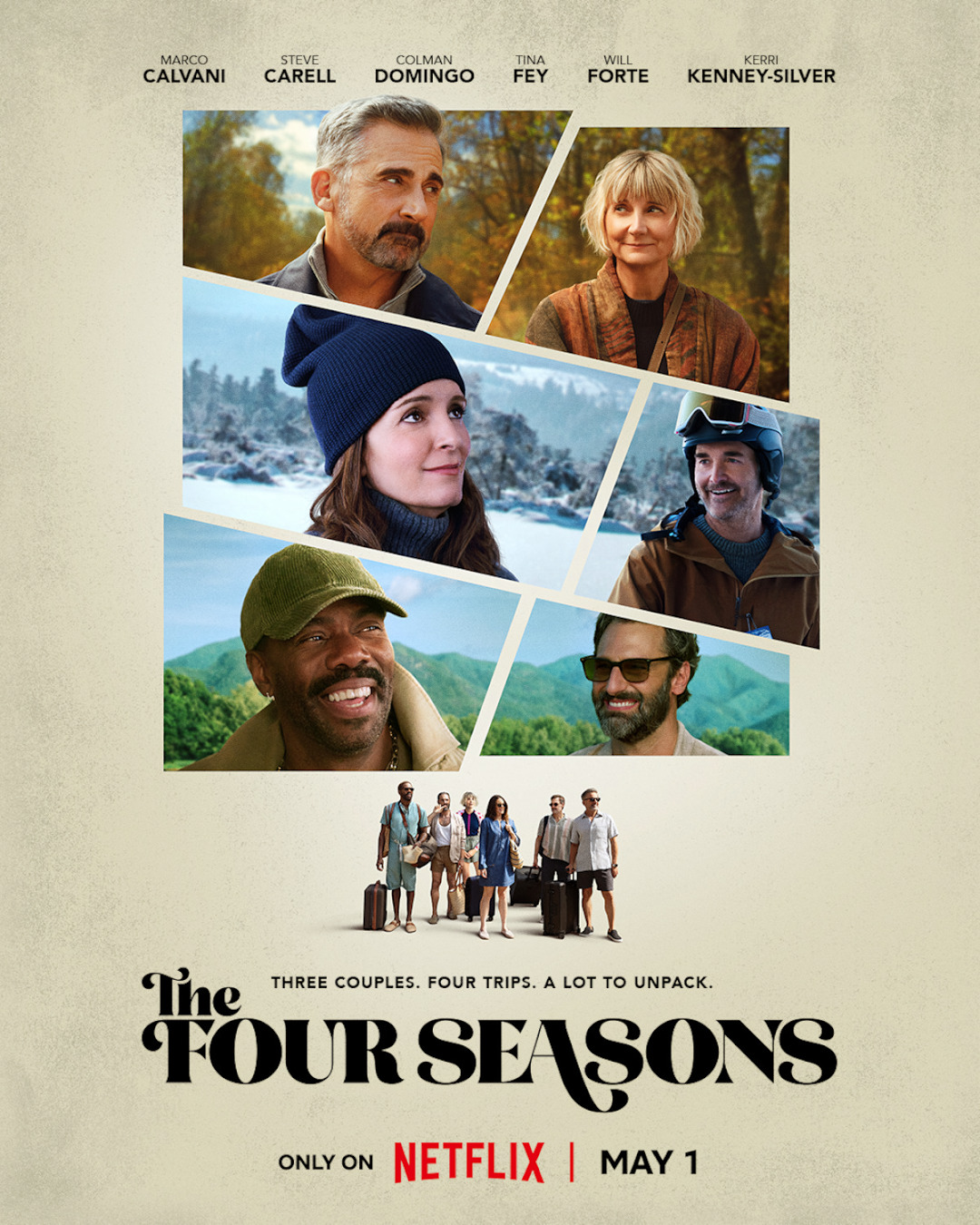
I struggle with whether or not I think this show is partially to blame for this response, or if it’s just the emotional charge of the subject matter. The Four Seasons, after all, is about three couples who are old friends and who are dealing with related struggles of decades-long relationships and growing older in a young world. After one friend, Nick (Steve Carell) leaves his wife Anne (Kerri Kenney-Silver) and winds up dating the much younger Ginny (Erika Henningsen), their tradition of group vacations are forever changed. Meanwhile, the other two couples, Kate (Tina Fey) and Jack (Will Forte), and Danny (Colman Domingo) and Claude (Marco Calvani), deal with marital struggles of their own.
The show is a well-structured eight episodes, spending two episodes each on a different vacation over the span of a year. They’re pretty quick thirty minute installments, with enough interpersonal intrigue to keep you watching. While it’s categorized and presented as a dramedy, it prioritizes the drama over the comedy, made more prominent when only some of the jokes land and many are, like the rest of the show, reliant on a relatable sort of humor. To get a bit into the behind-the-scenes, I was shocked to hear about the plans for a second season, as the show works as a self-contained miniseries. It ends at a satisfying point and wraps up the season’s conflicts in a way that feels complete and satisfying. I’m not sure I will watch it, but it gives me a new perspective on the show I’m not quite sure what to do with.
In general, the drama is on the stronger side, although there are some stylistic choices and Netflix-original-typical pitfalls that undercut it at times. While the couples’ issues are distinct from each other, they are related around common themes and work for the characters’ lives. There’s this frustrating yet interesting device where seemingly big moments happen offscreen, with the audience learning about them as the couples debrief with each other, often as they get ready for bed. It definitely communicates the relationships between these characters and allows the audience to get a particular feeling of long-term marriage, but it also serves to deemphasize a lot of the drama of the show. This is sort of whatever on its own, but it’s combined with this Netflix need to restate what just happened as a visual or subtle comment, explicitly and aloud. This is vastly more frustrating and, frankly, insulting to the audience. It’s by no means unique to this show, but it’s so poorly hidden here.
But I started this review talking about the annoying rejection of any criticism, which if you haven’t guessed by now, is people complaining that if you don’t like the show (or even if you just had mild criticisms of it, like me), you simply don’t understand marriage. Perhaps I could’ve overlooked seeing this online if someone wasn’t in my ear telling me this every time I had a comment on the show while watching it. Because it’s really not fair to judge the show on this seemingly frequent response, or my semi-negative viewing experience. But at the same time, I think there is a reason this comes up, which is that the show relies on that relatability too frequently. It mainly appears in the resolutions to conflicts coming as defenses of the marriages between the characters, rather than any kind of character change. This is most prevalent in Danny and Claude’s relationship, one of the best in the show as their dynamic is engaging and unique, why they work together and also why conflict arises between them. But (major spoiler, fyi) much of their conflict disappears when Danny must defend his husband against a rude comment made by Kate—despite the fact he has treated Claude in a similar way to how Kate characterizes their relationship. This acts as the turning point for both couples, and it very nearly works. Except the big shifts in Danny and Claude’s dynamic happens offscreen. It’s not that these beats don’t make sense (far from it), but that the show demands we simply imagine what happened during them, rather than getting to ever see them. They’re not plot holes, because I was never confused about what happened or unable to fill in the blanks, but they serve to uphold this idea of marriage, without ever exploring what that means for the characters.
With all this in mind, the show is just fine. It strikes a nice balance between intrigue and shying away from drama and conflict to have a mild tone throughout, but relies too heavily on relatability to work for me. That said, Anne’s fashion sense after her divorce was genuinely stunning. These artsy, organic looks, with bold colors and gorgeous silhouettes, have not left my mind since watching the show. I have little else to say about the costuming outside this, but genuinely her character is such an inspiration for my own wardrobe.
Thursday, 19 February 2026
Iron Lung (2026, dir. Mark Fischbach / Markiplier)
Imagine please, if you have not yet had the chance to watch this film, the length of a submarine from the rear, a narrow interior with sweat gathering on pipes along its sides, dark and lit by the same yellow light as appears on the stairs to either side of you, strips of light meant to guide you safely in the dark down the incline of a movie theater. It’s a cool experience. Claustrophobic, which I like, but quickly bringing in dynamic angles despite the limited set we remain in for most of the film.
This is a movie that has, due to the nature of its creation, gotten a lot of attention online. I was fortunate to avoid most of that discussion before I saw it, so I managed to go in with a fresh perspective save for a basic synopsis and the knowledge that the audio mixing is lackluster (Indeed this is true, and I’d recommend watching it with captions if you’re able). If you have, like me, escaped the discussions on this film, then you’ll want to know it’s about a man (Mark Fischbach / Markiplier) who has been convicted of a deadly crime and who is sent in a submarine into a sea of blood on a faraway planet to retrieve some unknown item. What occurs after this is a cycle of broken promises as the man in the submarine attempts to gather photographs and physical items from the bottom of this sea in aims of freedom from this submarine. As he explores the depths further and further, the horrific, cosmic nature of the creatures in this sea of blood is revealed.
As mentioned, the vast majority of this film occurs within the submarine, a choice I quite like and demonstrates an impressive variety in the cinematography despite the limited setting. I go back and forth over whether the claustrophobia of the film would be increased with fewer angles, but I like them so I’ll abandon that potential. What is a bit more surprising is the abundance of other characters. Simon is the only one we really see, but there are a series of voices encountered in different ways that allow the story to really move along. The nature of this method of interaction as inspired by a video game is actually charming, but it also means the plot is prioritized over Simon’s character, a choice that makes this movie what it is and is part of the reason it does not quite reach its full potential. Because we aren’t getting to explore the world, Simon’s life, or his perspective, it can be difficult for the audience to orient themselves if they are not familiar with the source material. So much focus is placed on the mechanics, a choice which does not work in film as it does in a game.
This pretty quickly begins to affect the pacing of the movie. We’re inundated with quirks of the ship and its functions, but none that amount to much. There are moments and scenes that never come to fruition, and more I’m sure I forgot. At one point, something unrelated triggered a memory of an earlier moment and I was so overwhelmed I couldn’t recall if it was resolved. Furthermore, I assumed there was more moments like this, but I couldn’t ruminate on this for long because there was so much other stuff to remember. And despite all this, I couldn’t accurately grasp the lore or the characters’ complexities, assuming either were present. The pacing issues were most egregious in the climaxes, of which there were three. Three distinct times in this film, I thought it was coming to the end, and I was only correct one of the times. When the first one came around, I was thinking about how we were about two hours into the movie—but we probably had another hour to go.
My overall impression of the film was that it’s amateur. Which is it. That is why I will attempt to word my next two paragraphs constructively, with the caveat that I am writing to my own audience. If I were to critique this film, I would emphasize two things. The first, that it needs to slow down and simplify. We need time to sit with some of this information and significant moments. Despite the fact that I felt every minute of the runtime, I was constantly overwhelmed, not bored. There were only a few times when my mind was able to slow down. With such a limited setting and cast, these overwhelming moments could be used sparingly to create more of an effect. That amateur feeling comes in part from this sense that everything is packed in there to keep an audience interested and communicate everything. But it served instead to be overwhelming and muddled. Simplifying the scope of the story and slowing down the pacing gives time for ideas to develop more fully.
The second thing I’d emphasize is a variety of emotion in the characters. I think some of this is the performances and direction, and some of it the writing and sound mixing, but there was so much yelling in this film. A more varied approach to these characters would allow them to be more distinct from each other and bring in an emotional resonance that was not present. The immediate jump to anger—to frustration and fear displayed in shouting, only sometimes intelligible with everything going on—betrays a lack of understanding of how these characters’ minds work, their backstories, and their personalities. If their complexity (generally something good to aim for, especially with this film’s central concept) is not communicated in their words and actions, then it should be in their performances.
I am aware that these notes imply a certain distinction from the movie that is in many ways contrary to what it presents. And in most cases I’m at least slightly more self-conscious about doing that. But for this particular film, I think this is less an instance of disliking the movie the director intended it to be and more being unable to parse what that is. Part of this comes from it being an adaptation—and not just that but an adaptation of a video game, a medium entrenched in its own composition, which I say with appreciation—but most of it comes from an unfocused application of elements to developing the central ideas. The bones of an interesting story are here—a statement I make in part because I love submarines and isolated environments—and while I don’t think this is it, I believe Fischbach can develop those skills to demonstrate a distinctive perspective and voice in his filmmaking. He certainly has the passion and the goodwill of his fanbase to continue testing new ideas and methods.
Wednesday, 18 February 2026
The 'Burbs (2026, created by Celeste Hughey)
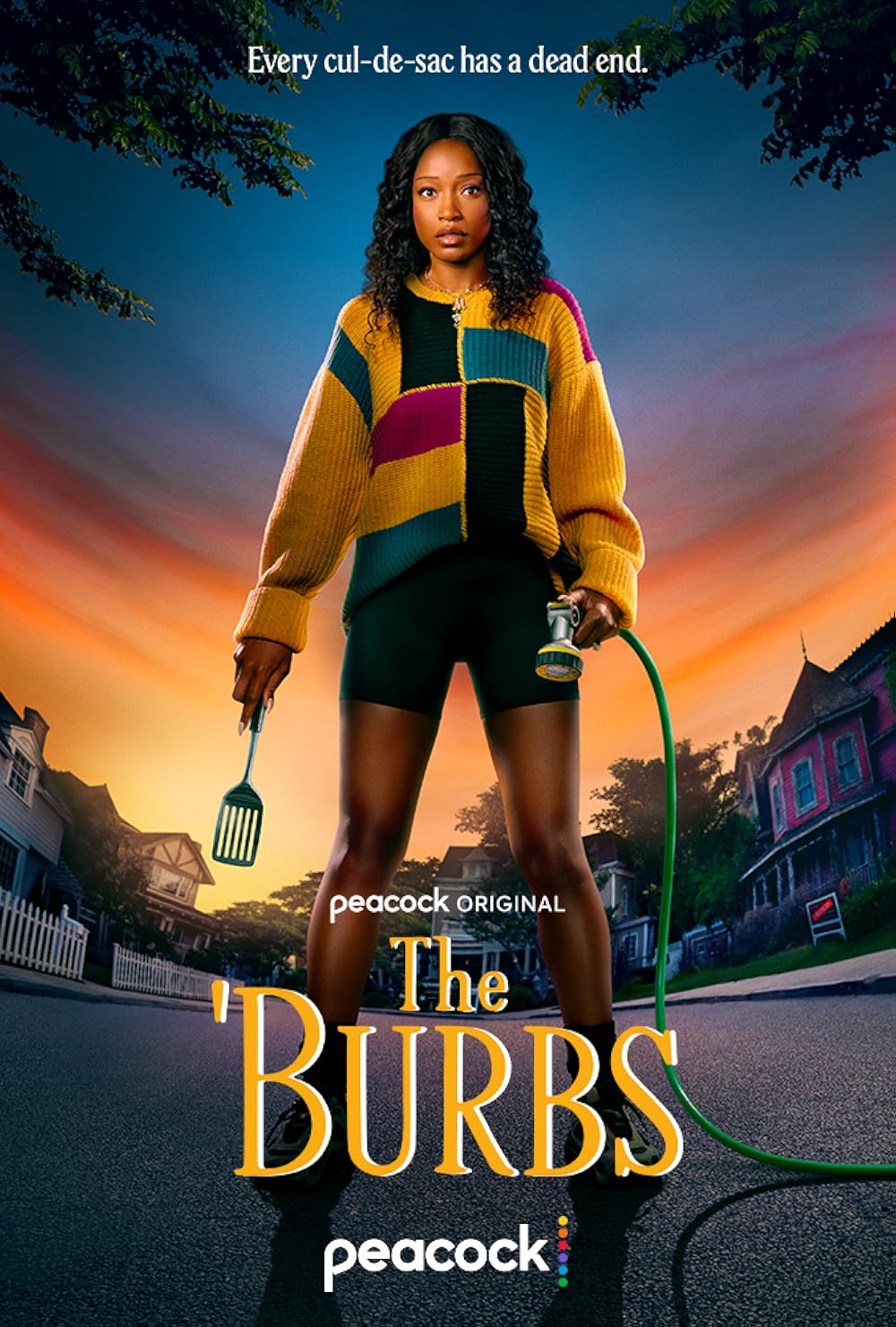
The ‘Burbs is a television adaptation of a 1980s cult classic comedy horror film that I’ve never seen. The television adaptation presents a version of the suburbs that is full of strange figures and stranger secrets. New parents and newlyweds Samara (Keke Palmer) and Rob (Jack Whitehall) move to the house where Rob grew up. Distracted by an infant and nosy neighbors (Julia Duffy, Paula Pell, Mark Proksch, Kapil Talwalkar), Samara becomes convinced there is some sort of conspiracy about the Victorian across the street and its new owner (Justin Kirk), while Rob seems to be hiding something about the girl who died there decades ago.
The tone of the show is relatively consistent in its comedy-thriller feel, if a bit unsteady at times as it attempts to balance the dark secrets of the town and its inhabitants with the jokes. Mainly this means that there is a poorly timed joke in the midst of more serious scenes, though it truly wasn’t that egregious. The jokes falling flat was more of a consistent problem throughout, and poor timing was just one reason; others included lapses in character voice and a refusal to really push various premises as far as they could go. The show was definitely cheesy, although it also had its charm at other moments.
There is a major shift in the season that changed my opinion of the show overall. I was enjoying it well enough as a cheesy comedy with an actor I enjoy, but suddenly it stopped being about this group of oddballs and unlikely friends and was then following the set of childhood friends with a dark past. This made the two halves of the season feel disjointed, reducing the significance of the first half and making the setting of the suburbs and all its flaws and virtues suddenly feel insignificant. When it comes to the tone-balancing issues as the stakes ramp up, I just found myself wanting for that initial oddball cast instead.
At the end of the day, this show wasn’t horrible, I just wasn’t entertained by it. Towards the end, it began to lose my attention as the pacing became hard to follow. The cliffhanger ending for the whole season felt like that of a single episode, making it feel unresolved by a single thirty-minute synopsis rather than bait for another season. It was a fine binge watch, but there was a lot of unrealized potential.
Tuesday, 17 February 2026
White Lotus, Seasons 1–3 (2021–2025, created by Mike White)
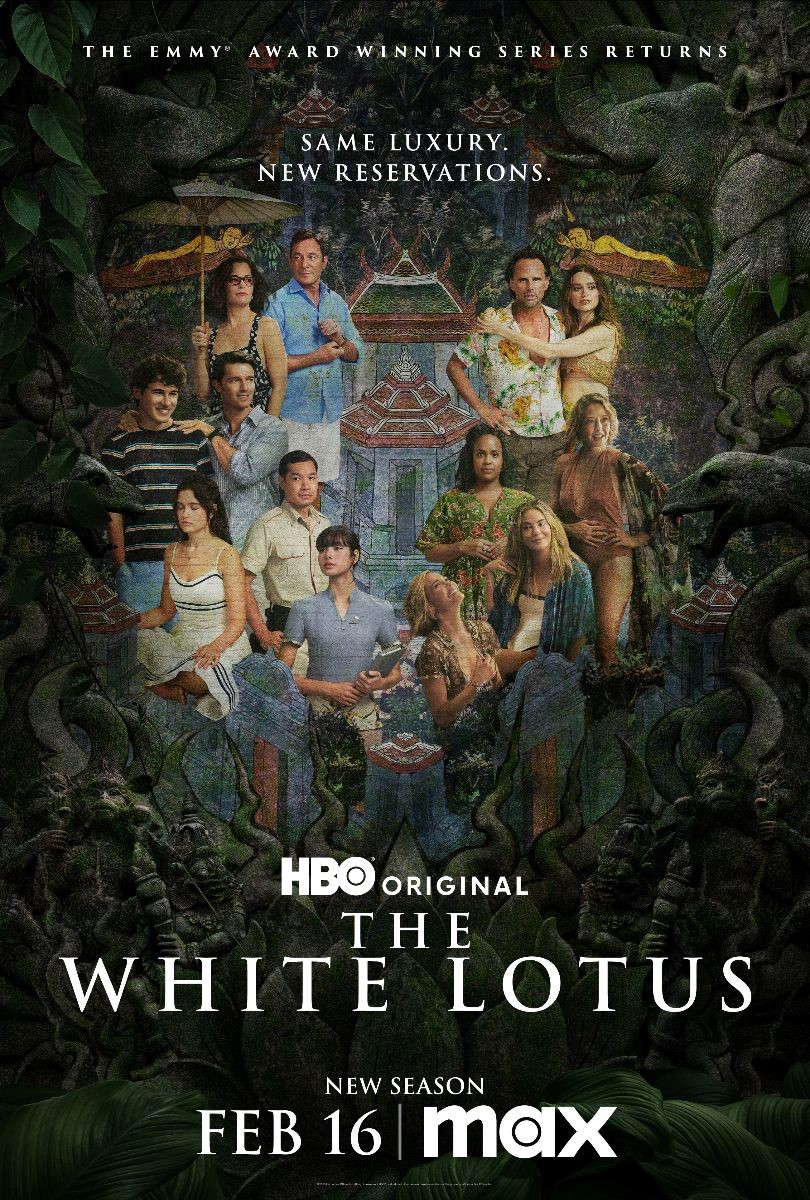
Around this time last year, I was suddenly inundated with ads and strangers' recommendations and think pieces about this show White Lotus I’d never heard of. I certainly took my sweet time getting around to it, and slightly-less-sweet time getting through (the first season of) it. Eventually I was able to piece together what the show is about and why it’s so popular.
White Lotus is a drama comedy anthology show with a star-studded cast that satirizes the lives of the wealthy in separate but interconnected seasons, all taking place at a different resort in the same chain. Each season boasts four sets of characters in similar and often overlapping forms—married couple, intergenerational family, close friends with hidden tensions, and the staff at the hotel or of the guests. These sets of characters interact to a minimal extent (often with the exception of the staff) but their stories align with a set of similar themes. There’s an almost literary quality to their arcs, with these monumental changes or stagnations in character development that feel reminiscent of a vaguely short story-style “revelation” or “undoing” more than anything. But these arcs are the driving force of the story, otherwise quite mild in plot.
The mood is particularly interesting, especially when compared to the visuals and how they develop over the three seasons that have been released. It always begins with this vague impression of a place, a luxurious resort in a beautiful location, and an introduction at the tail end of their travels as they arrive on a boat. But then the tide settles—removing these characters from their lives, suspending them in time, away from the rest of the world even as it clearly moves on outside them. They are, narratively as well as atmospherically, on vacation. This is complemented by flat or tousled hair, mismatched outfits by bad packers, cuts to shots of trees, statues, and animals, a stunning instrumental soundtrack. But these same elements can be used to disorient: recontextualizing beautiful statues as something foreboding, pushing the percussion to make the music tense in mundane moments, making characters appear disheveled and distracted. Stranger still is that this disorientation never quite leads to proper tension, despite the framing knowledge that something deadly will occur during the course of these people’s vacation. The seasons differ in whether they ramp up tension throughout or stick with a more consistent tone and conflict, but they always end in a slightly underwhelming culmination of the main stories, reaffirming that indeed this is just a blip in these characters’ lives, except for the ones who die.
My enjoyment of the show was heavily dependent on the season, its conflicts, and its characters. The second season was the strongest, and the first the most difficult for me to get through by a wide margin. There are plenty of commonalities between the seasons in their structure, general ideas, and recurring character types and traits, but they are distinct as the style develops, season-specific themes are varied, and different dynamics and actors reveal new angles in similar stories. It works as a satire without sacrificing compelling characters (For reference, this is the weakest part of the first season). I’ve spoken before about caricatures of wealthy people or public figures that may be cutting in a political cartoon but are insufferably boring to watch television about. It’s not just that this show doesn’t do that, but that it actively allows for complex and interesting characters within that satirical intention and portrays a spectrum of change for them in their main conflicts of the season.
This show is really doing something different with its vacation and destination setting, dynamic characters yet critical eye, and thoughtfully crafted narratives. I characterized the character arcs as literary earlier, and strangely enough that’s also how I would characterize the show as a whole. I’m not necessarily interested in seeing these traits or this distinctive style replicated elsewhere, but it has a clear and compelling perspective—and technical ability to achieve that perspective—that I have to give it major kudos for.