Tuesday, 7 April 2026
Bridgerton, Season 4 (2026, created by Chris Van Dusen)
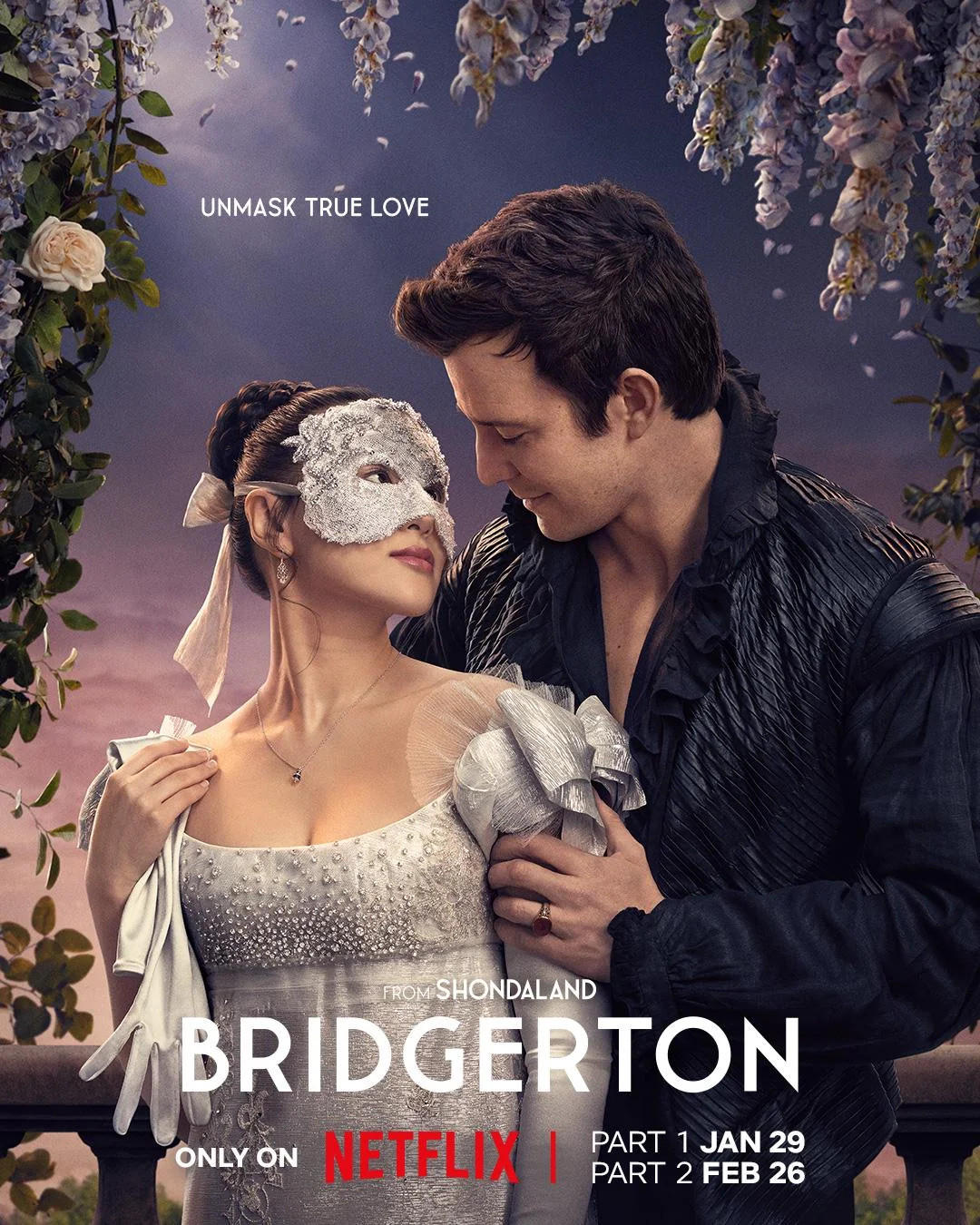
There’s a scene in the later half of the newest season of the (alternative history) period romance television show Bridgerton between royal advisor Lady Danbury (Adjoa Andoh) and the Queen (Golda Rosheuvel), in which the latter finally gives permission for the former to do something she’s dreamed about for several episodes now: return to her homeland in the late years of her life. It’s a surprisingly complex conflict compared to the rest of the season, in the sense that the show has other storylines that not only complement this one, but influence and interact with it. It culminates in a weighty moment of acquiescence on the part of the Queen, a sentiment communicated through silence and meaningful smiles that feel more self-congratulatory than emotional. This exemplifies the trends of this season in two ways: first in the writing, which proves to have an inability to feel real, instead sounding like placement text for actual dialogue meant to be added later; and second in an overwhelming weight given to moments without any effort to earn those moments in the first place. But before I get to that, the content of the season for your ease of comprehension:
The primary storylines of the season are the dynamic between second son of the Bridgerton family, Benedict (Luke Thompson), and illegitimate child-made-housemaid Sophie (Yerin Ha); and that of recently married Francesca (Hannah Dodd) and John (Victor Alli) with John’s cousin Michaela (Masali Baduza) who left Francesca quite flustered at the end of last season. The secondary storylines involve Eloise’s (Claudia Jessie) slow creep into spinsterdom and her struggling relationship with her younger sister Hyacinth (Florence Hunt); the Queen’s refusal to allow Lady Danbury to leave her side and the latter’s attempt to appoint Alice Mondrich (Emma Naomi) as her replacement; Penelope’s (Nicola Coughlan) dwindling interest in being and ability to be Lady Whistledown; and the romance between Lady Violet (Ruth Gemmell) and Marcus Anderson (Daniel Francis).
The show is, reading generously, following the third season shift of making an attempt at the ensemble cast structure you see in a lot of period dramas, despite its rejection of any other quality of the genre—moderate interest in historical accuracy or at least coherent ambience, interconnected storylines that contribute to themes or genres of conflicts in episodes or seasons, questions of social groups besides affluent nobility of marriage age and interest, using limitations of period social dynamics as a point of conflict and tension, etc. Much of this is in the show’s interest or, more often, unique concept. The stylistic costumes, production design, and music contribute to the frivolous yet romantic tone, the relaxed social expectations allow for tension when it is needed and redirected focus when it is not, and the main family’s structure organizes the show with a clear trajectory into perfect marital bliss (and occasional tragedy) for its eight Bridgerton siblings.
All right, I know, my flippant tone betrays a central tension between me (genius) and the show’s basic concept (iffy). The marriage thing is something I’ve been willing to overlook as the show has previously attempted incorporating the occasional interesting idea, if frequently lackluster execution. The show’s fourth season is easily its weakest. I’d hoped the third season was a blip after I really enjoyed the second, but it does seem to be the turn it is taking from here on out (disappointing, considering the announcements for the fifth season, but I digress).
I want to pull a bit at that ensemble cast observation I made earlier, because I think that done well, it would be a welcome change to the show. We spend most of the first two seasons with the lead couples and only occasional moments with the large cast—this allows their relationships to feel full and complex and, frankly, make sense, but naturally makes the other characters a bit less fleshed out. The third season takes a moment to find its footing with a redirected structure of ensemble cast, to the detriment of the lead couple and without sufficient added benefit for the rest of the cast. There are huge leaps of character, monumental moments that seem entirely forgotten, an inappropriate oversight in just three seasons of eight episodes. I say that not to review these seasons but to express that going in, this show needed to win me back because it had proved to make poor decisions when attempting to change this format. Season four takes the issues we’ve seen previously and exemplifies them. This is perhaps most prominent in the season’s lead couple, Benedict and Sophie, whose relationship leaves something to be desired. The thing is, their romance is entirely pulled from Cinderella with surprisingly little deviation—making my inability to believe them as a couple truly a feat.
I’ll get to Benedict’s side in a bit, but as for his love interest introduced this season, there is little for Yerin Ha as Sophie to work with. As established, Sophie’s story is based on a fairy tale, which provides minimal complexity to be explored. Furthermore, to contextualize her existence, the show briefly and poorly attempts to bring in a storyline with servants. This storyline is bland and inconsistent when it’s even present. Its characters have little motivation and no backstory because there is no earnest attempt to actually make them characters on the part of the writers, just remind the viewer that in fact other classes do exist (and that the Bridgertons are the kind sort of nobility, naturally). Sophie’s family life is as regurgitated as her romance plot. Penelope, who we’ve spent three seasons with, has a nearly identical family structure—sans illegitimacy, I suppose.
The lack of interiority for the servant characters speaks to the show’s refusal to engage with historicism at all. Yes, this is the concept of the show, but it’s silly to pretend like the ideas it presents—and even the inherent idea of a regency-era romance—exist in a vacuum. After past seasons, I’ve critiqued the show for not sticking to its guns with the social rules it presents, because that’s the thing that makes regency-era romance so exciting: the tension, the repression, and with a show like this, the eventual break from that format. For this season, though, even the guise is eschewed except for the most surface-level (and safely resolved) plots about class and marriage. The conflicts in this season, aside from being outright contradictory at times (see Eloise’s versus Michaela’s spinsterdom), don’t make any sense for even the mildest hint of the show’s concept (the LaCroix of it, perhaps?). We see this quite a few times in the season, but it’s best exemplified in the initial conflict between Francesca and John. Despite being married for nearly a year now, Francesca has suddenly become very curious about this mysterious “pinnacle” everyone keeps talking about. She asks around about it, mostly to choking responses, and it culminates in John reassuring her that she doesn’t need to fake an orgasm for him. In another example, Lady Violet’s maid reassures her that wanting sex is normal, and she’ll help her work out how to get her boyfriend to spend the night without anyone noticing. You’ll likely notice that these conversations speak to a contemporary rhetoric while also approximating regency social expectations from, like, other period pieces. I’m not expecting the show to be a history textbook (in most cases, I’m the first to forgive historical inaccuracy), but at times the dialogue feels taken from a modern drama and given a slightly formal punch up. The problem with this conflict and dialogue trend is that it still attempts to root other conflicts in an idea of historical accuracy—most relevant to the season in Benedict’s romance. The imagined history of the world allows for certain leniencies but not others; obviously this is inherent to the DNA of the show, but it does start to reveal holes in this idea as time goes on.
We’ve spent the last three seasons establishing Benedict character as a bisexual-coded bohemian—an artist with a romantic soul and too much love to go around, really. But this show loves reformed rakes, conveniently stated in the dialogue this season, and indeed “just finding the right person” (a line of dialogue spoken at least twice, once by Lady Violet). I will also here mention a central component of Cinderella stories is her “fixing” the love interest. But of course these two ideas don’t impact Benedict’s sudden shift in character to being utterly in love with a woman he’s met once, not a shift between seasons but in fact in the first episode of the season, in which he kisses a man who is never to be seen again. We’re meant to understand this very, very sudden shift as him being enamored by Sophie’s inherent awe of the world, but that’s not ultimately that relevant to their actual feelings developing or their romance overall. But if you’re worried about this romance being at all problematic, nevermind inconsistent, Benedict does come out to her with ultimately little to no reaction on Sophie’s part (she’s too worried about confessing to being illegitimate, so I can’t blame her).
Truly, I could talk about the sexual politics of this show as being actually abysmal (and other politics as well). I’ve not even touched on Eloise’s spinster plot—one of the most up and down things across all four seasons and mostly this season she’s just fighting with her love-crazy younger sister—or the shocking lack of anything between Francesca and Michaela despite my insider knowledge about the end of the previous season and content of the forthcoming one. Mainly this is because I haven’t yet seen how they resolve. Also because I think that despite all its flaws, this show is so focused on the women characters that the occasionally inanimate gentleman love interests often fall to the wayside anyway. But I am truly put off by the show’s refusal to imagine another kind of love despite the strength of that small difference in Francesca and John’s romance in the third season and the vastly positive feedback about it. And also the potential of Lady Violet’s story based on the final episode of this season.
In most other ways, the show has its style and sticks to it. The music, visuals, and performances are mostly on par, with the variable cast mixing the last one up a bit. I’ll give them grace that they are technically on a period drama despite the show’s best efforts to make itself anything but. The costumes, as usual, are particularly variable, with some interesting choices and some… interesting choices. I think that if you’re into the first and second seasons of the show, you can honestly just stop there. If you find that you like it despite its many flaws, good for you. Honestly, I’ll probably watch the next season anyway—it’ll be a pleasant surprise or a further disaster. How exciting!
Sunday, 5 April 2026
They Will Kill You (2026, dir. Kirill Sokolov)
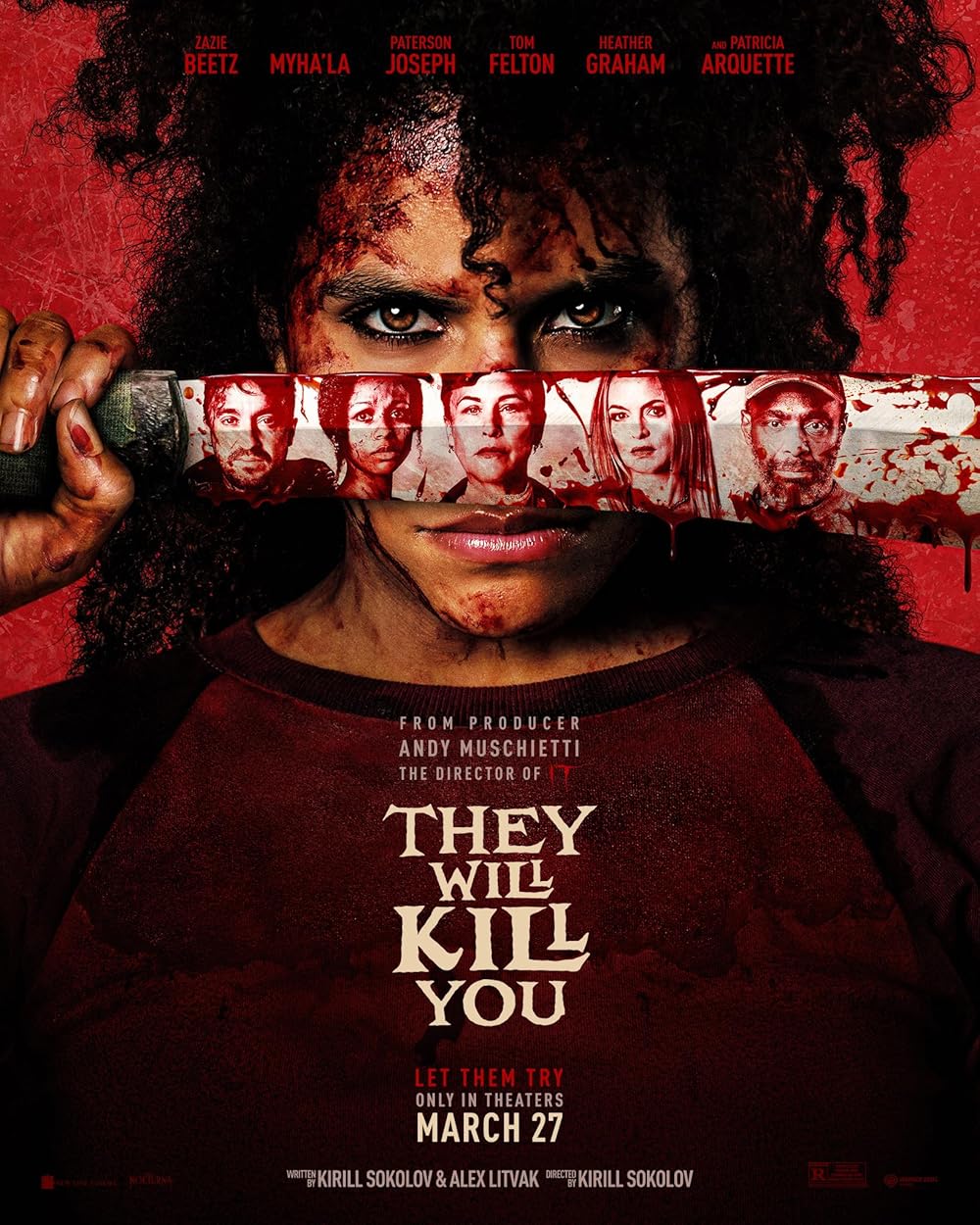
As a frequent movie-goer, I’m used to seeing film trailers more than once, or even twice. In the case of The Devil Wears Prada 2, I’m used to seeing them twice before the same film. But imagine my surprise when I watched the trailer for They Will Kill You back-to-back with the nearly identical Ready or Not 2—films released, shockingly, a week apart. That is to say right off the bat: the concept of this movie is far from novel. This only become more apparent as the film unfolded, with ideas and at times full scenes taken directly from other movies.
But first: the concept. Ten years after abandoning her sister during a confrontation with their abusive father that would eventually culminate in her arrest, Asia Reaves (Zazie Beetz) arrives at the exclusive Virgil high-rise to work as a maid. Of course, she’s targeted by the mysterious robed figures attempting to kidnap her for unknown yet likely nefarious purposes—only for it to be revealed that Asia is fully prepared to fight off anyone as she attempts to rescue her sister Maria (Myha’la) from The Virgil. The building is revealed to be the playground of a community of immortals (most notably, Tom Felton, Heather Graham, Patricia Arquette, and Paterson Joseph) sacrificing people to the devil in return for their immortality.
If you’re at all familiar with horror films, this plot defines derivative. Ready or Not is the film it most emulated that I recognized, but certainly there were others as well. It’s not just concept and structure either—there are two scenes directly parallel to ones in Ready or Not, which I confirmed by watching it not two hours later. The first is the main character being wounded by a child aligned with the people trying to kill her, and promptly knocking the child out with a punch. Valid, in both cases, and virtually identical. Completely separately are two confrontations in a kitchen with an island in which the heroine is stalked by a man—and both scenes include old-fashioned shotguns. These are just the moments that stood out, but I cannot stress enough the distracting lack of originality in this film’s plot and writing.
With that said, this movie is a blast. Zazie Beetz has the charisma to keep the audience glued to their seats, delivering exciting action sequences that defy all reason. That brings me to my favorite part of the movie, the excellent fight choreography, cinematography, and editing, which made those sequences more exciting than anything I’ve seen in a long time. There’s this style to the editing that is truly such a blast to watch. The film’s style is carried into the non-action moments, with my favorite bit in the crawlspace/vent sets, which feel deliberately artificial in the best way. The final fight in particular felt out of a video game with how the camera moved—a choice I’d normally raise an eyebrow to, but the film’s previous scenes allowed me to give a chance to. And I’m glad I did.
But that brings me back to the writing. Despite the visuals of it looking great, the final confrontation made no sense. It was mainly an issue of directly contradictory lines, I think, and an immediate sinking feeling when Patricia Arquette’s character helpfully explained in post the only detail of the scene that did make sense.
This movie is one of those I get stuck on where the writing is truly and actively leaving a lot to be desired, but the rest of the movie is so fun and exciting and skilled. It’s the sort of thing that allows me to overlook this glaring flaw, but that glaring flaw stops it from being a great movie. If you’re into a blood-splatter type film, I’d totally give it a shot, but know there’s not going to be a ton of interesting things going on in the writing.
Saturday, 4 April 2026
Project Hail Mary (2026, dir. Phil Lord & Christopher Miller)
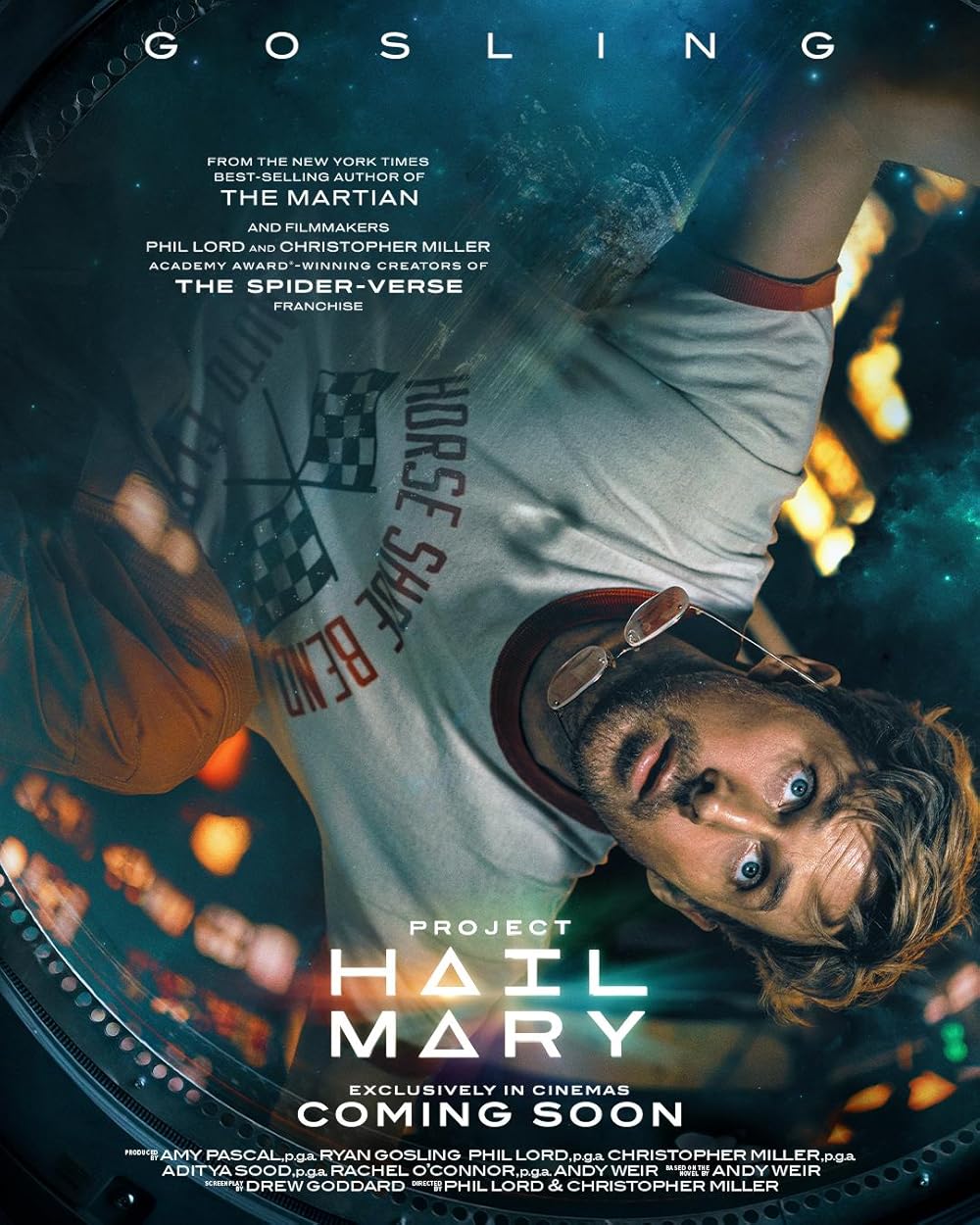
Project Hail Mary adapts Andy Weir’s 2021 novel of the same name which both follow an astronaut with amnesia slowly regaining his memories over the course of the book and film. I’m going to spoil the reveal now, but no more than the trailers already do. Like in the novel, middle school teacher Ryland Grace (Ryan Gosling) is recruited by Eva Stratt (Sandra Hüller) to assist in researching the alien microorganism causing catastrophic global cooling. While in space, he meets an alien he calls Rocky (James Ortiz) dealing with the same impending catastrophe.
I’m always a bit conflicted about whether to include a film’s marketing in my review due to the distinction between the film and its trailers (and other advertisements) and my own uneven exposure to said advertisements. With a blockbuster like this, I’m a bit less hesitant—and also it must be known that, much to many fans’ annoyance, the trailers spoil the initial conceit of this film, the amnesia element. The thing is, I don’t think the movie is at all ruined by knowing these certain details.
It’s a strong film with beautiful, fun visuals—fun design of Grace’s ship, thoughtfully generic locations on Earth, and the invented elements were really beautiful (the alien design, their ship, etc.). I was fortunate to see this film in IMAX, so all the moments of gorgeous visuals were really able to pop. I did occasionally feel like the film was paced very quickly, except for a couple drawn out moments. That said, I certainly did not feel the two-and-a-half hour run time (yes, really).
Gosling and Ortiz’s performance were solid, appropriately funny and heartfelt and you felt all of the chemistry between these two characters. Comparing the adaptation to the novel, I was most pleased with the Earth flashback scenes. Breaking from Grace’s strong voice allowed the characters to feel more fleshed out than I found them in the book and made the stakes more urgent. In particular Hüller’s restrained performance allowed her to feel real but still funny, in a deadpan way compared to Gosling’s performance. There were a few smaller characters we got to see a few times, and I (and most of my fellow audience) was of course charmed by the addition of Carl (Lionel Boyce), who brought great energy to the earlier part of the film and established Grace’s serious need of a friend.
This was a very good movie—a total blockbuster, and definitely the sort of thing you can watch with most people, but that’s it’s strength. I was definitely able to connect to it a bit better than I was the book.
Monday, 30 March 2026
Undertone (2025, dir. Ian Tuason)
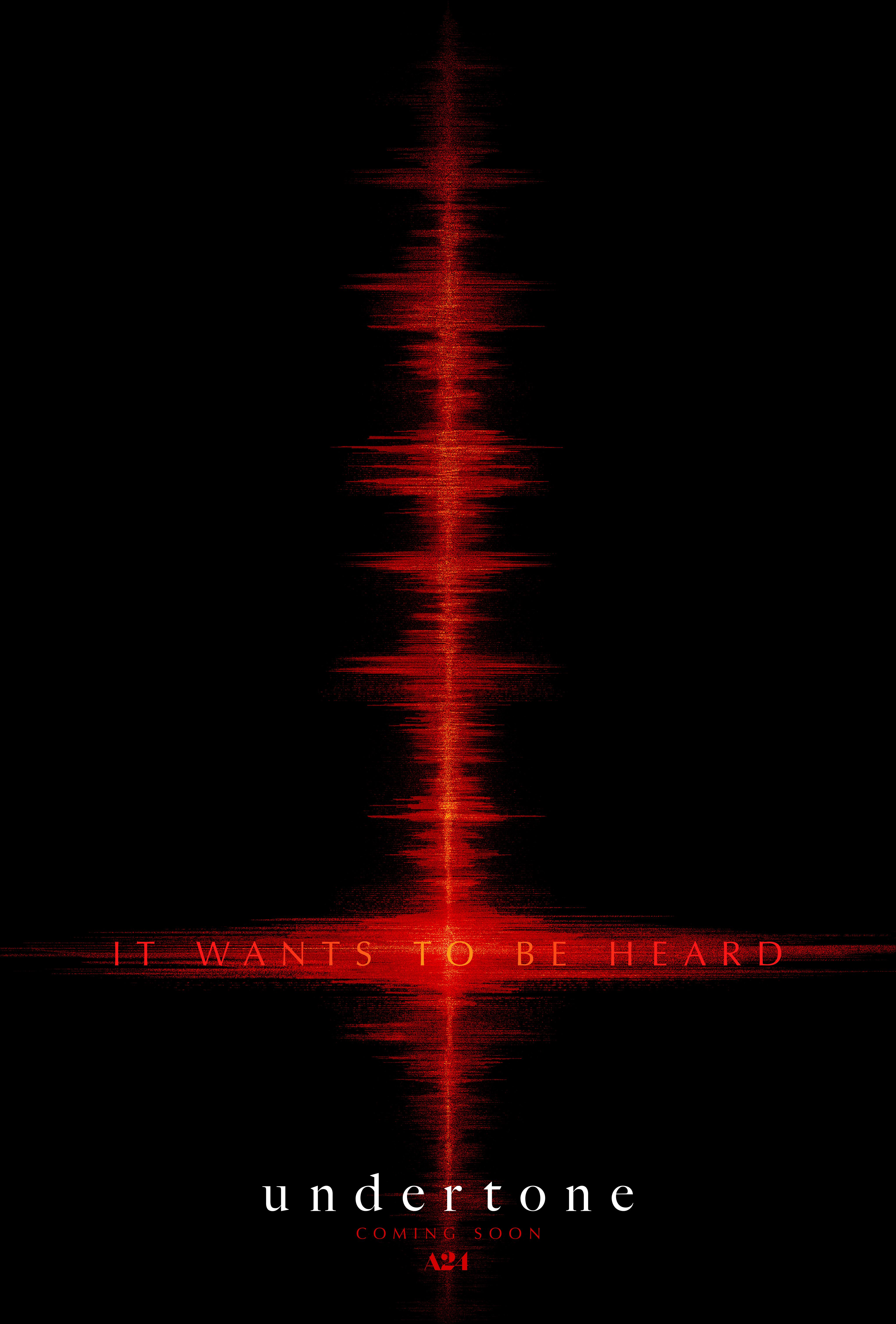
Undertone is a 2025 horror film that emphasizes audio design to increase tension and dread. It follows paranormal podcaster and resident skeptic Evy (Nina Kiri) as she lives at home to care for her dying mother (Michèle Duquet). Of course, paranormal occurrences begin to ramp up after listening to a set of recordings on her podcast with her friend and co-host Justin (Adam DiMarco).
The film has impressive sound editing—critical to its concept—but it struggles to balance them with meaningful visuals. This is immediately apparent in the first podcast recording session, where we see a few rooms in Evy’s house from different angles, the significance of which is not always realized. Strangely enough, it’s not the restraint of the visuals that surprised me, but the lack. Each cut removes your attention from the audio as you scan the screen to find something scary or off. As the film goes on, the inclusion of religious imagery amount to close ups of statues and paintings around Evy’s mother’s home. I just rarely got the sense this worked best as a movie rather than an audio-based medium like a podcast. There was the detail of the only two people we see are Evy and her mother (everyone else is a voice, usually on the phone or recording), which I appreciated and added to the sense of isolation in the home, but didn’t feel like enough to warrant the change from the original radio play format.
That said, I understand why it wasn’t a radio play—the concept is pretty messy and would’ve felt equally so in a medium more expectant of interesting audio design. The entire premise of the haunting is a podcasting duo (who have truthfully one of the worst recording schedules I’ve ever seen*) who receive a listener email with ten several-hours-long voice recordings that they commit to listening to on the show. Of course we and they hear snippets of the more interesting parts of these recordings, but the film plays all ten. Honestly, I’m impressed the pacing wasn’t awful, but ten was still way too many. Outside of this, you get some… less than novel horror elements: children’s songs, hidden messages in those songs, creepy drawings, fugue states when those drawings are created, those lackluster religious elements, a comparatively more subtle approach to sickness/encroaching death, and folkloric demons. (If you frequent the same corners of the internet as me, you might be able to pick up a common thread between those things, but every time I try to write a proper explanation it comes across as mean-spirited, which I don’t feel towards this film.)
Suffice to say: this movie is doing a lot on paper, and very little on screen. Despite the large list I just enumerated, the actual film is far too subtle to actually scare, which makes the intense climax come across as more cheesy than anything. Although skilled, the sound design contributes to the subdued sense of horror and doesn’t wow in the same way if you are, for example, a frequent listener of horror audio dramas and thus more familiar with such elements. This movie is decent. It totally got me for some of it, bracing myself for a jump scare. And I left the movie laughing, which indicates that I had a good time, but also that the horror didn’t really hit.
*Genuinely it’s wild. They record maybe 10-20 minutes at a time. For Evy, it seems to be from 11pm-3am, and for Justin, 4am-8am, as they deal with a time difference. At one point there’s a live episode recording with listeners calling in. There is no system in place to vet these callers. You’d think this would be impractical considering how frequently they break character during regular recording sessions and presumably have to edit the episodes before they go out, but this doesn’t seem to occur to them. The practical elements of the podcast were incredibly distracting throughout the film; frankly, I don’t think this would be a very good podcast to listen to.
Wednesday, 18 March 2026
Bugonia (2025, dir. Yorgos Lanthimos)
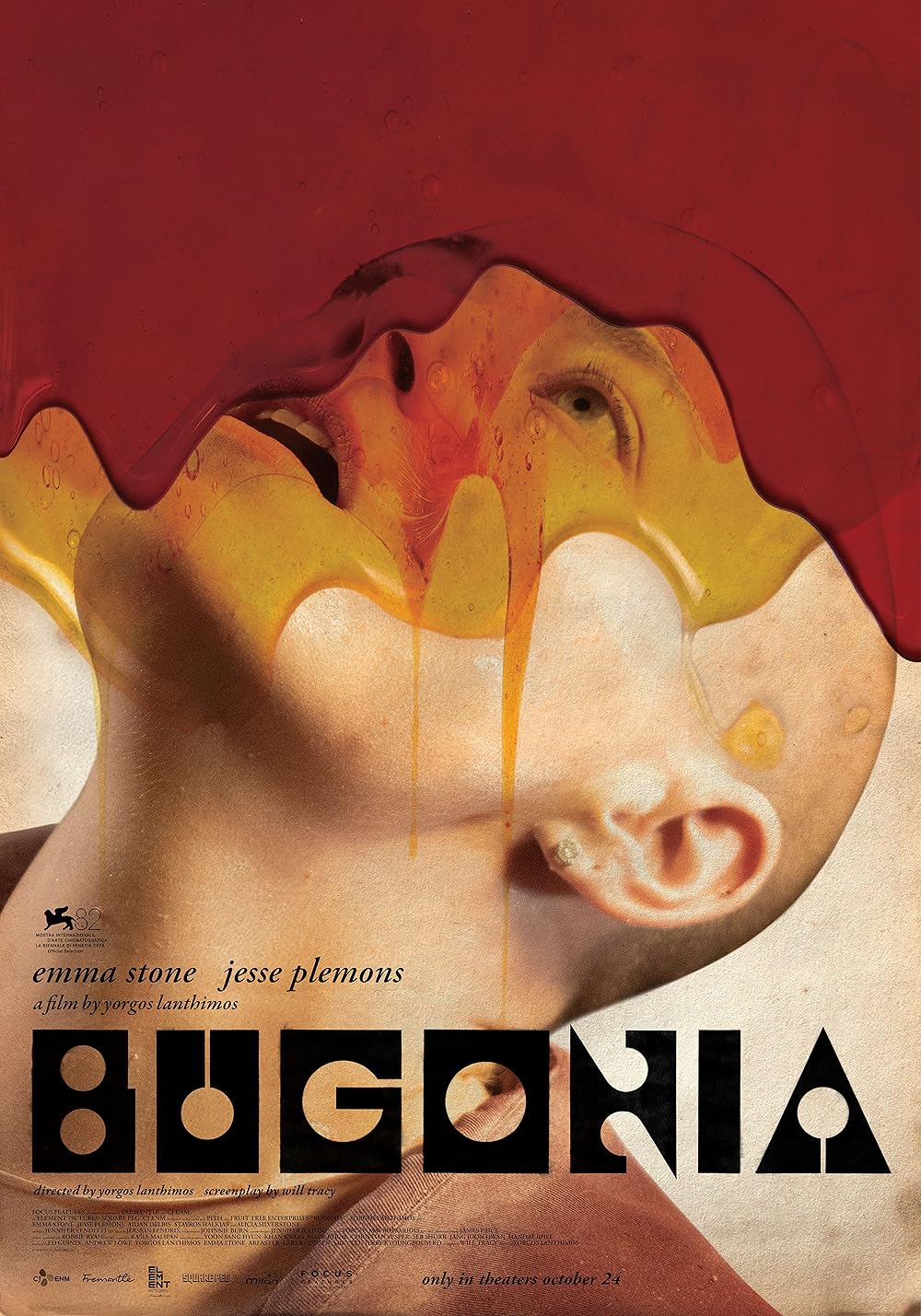
I was very much excited to get a chance to follow up on Yorgos Lanthimos and Emma Stone’s new (non-anthology) project after I adored Poor Things a couple years ago and enjoyed The Favourite last year. Bugonia is a remake of the 2003 South Korean movie Save the Green Planet! and follows two men, Teddy Gatz (Jesse Plemons) and his cousin Don (Aidan Delbis), who kidnap the CEO of a pharmaceutical company (Emma Stone) because they believe she is an alien and seek audience with her alien emperor.
The film has this sharp, angular quality to its visuals (courtesy of Robbie Ryan), true to Lanthimos’ highly stylistic style but distinctly modern in its other qualities. In particular, there are recurring visuals of bees and flowers, contrasted first with the lived-in design of Teddy and Don’s home, and again with the high-tech luxury lifestyle of CEO Michelle Fuller. This sense of contrast naturally highlights the difference between the characters’ lives, especially fleshing out Teddy’s background, which is also established in artistic flashbacks exaggerating his mother’s medical treatment. I loved how these flashbacks played with memory and feeling, contributing to a lofty feeling despite visuals constantly pretending to be grounded.
This sense of contrast and strangeness is further explored through the characters’ mannerisms and vocabulary. There’s a particular scene where the CEO is speaking to her captor Don as he essentially has her at gunpoint and she has this perfect seated posture. It’s communicating so much about her assumed power and poise even in this serious situation, and it’s building on this rigid, rehearsed vocabulary and delivery she’s used throughout the film. There is a similar intentionality with Teddy and Don, although they are so different to her. I’d argue all of Lanthimos’ films I’ve seen have really strong performances, and this one has the same emphasis on the main character’s interiority above other characters, but they stood out to me with this film.
This isn’t my favorite of Lanthimos’ work—it’s remarkably restrained and artistically straightforward compared to much of it, but that simply redistributes the weight of the film. This was an absolutely captivating movie and I’m really fortunate to have experienced it in a cinema.
Tuesday, 17 March 2026
Oh, Hi! (2025, dir. Sophie Brooks)
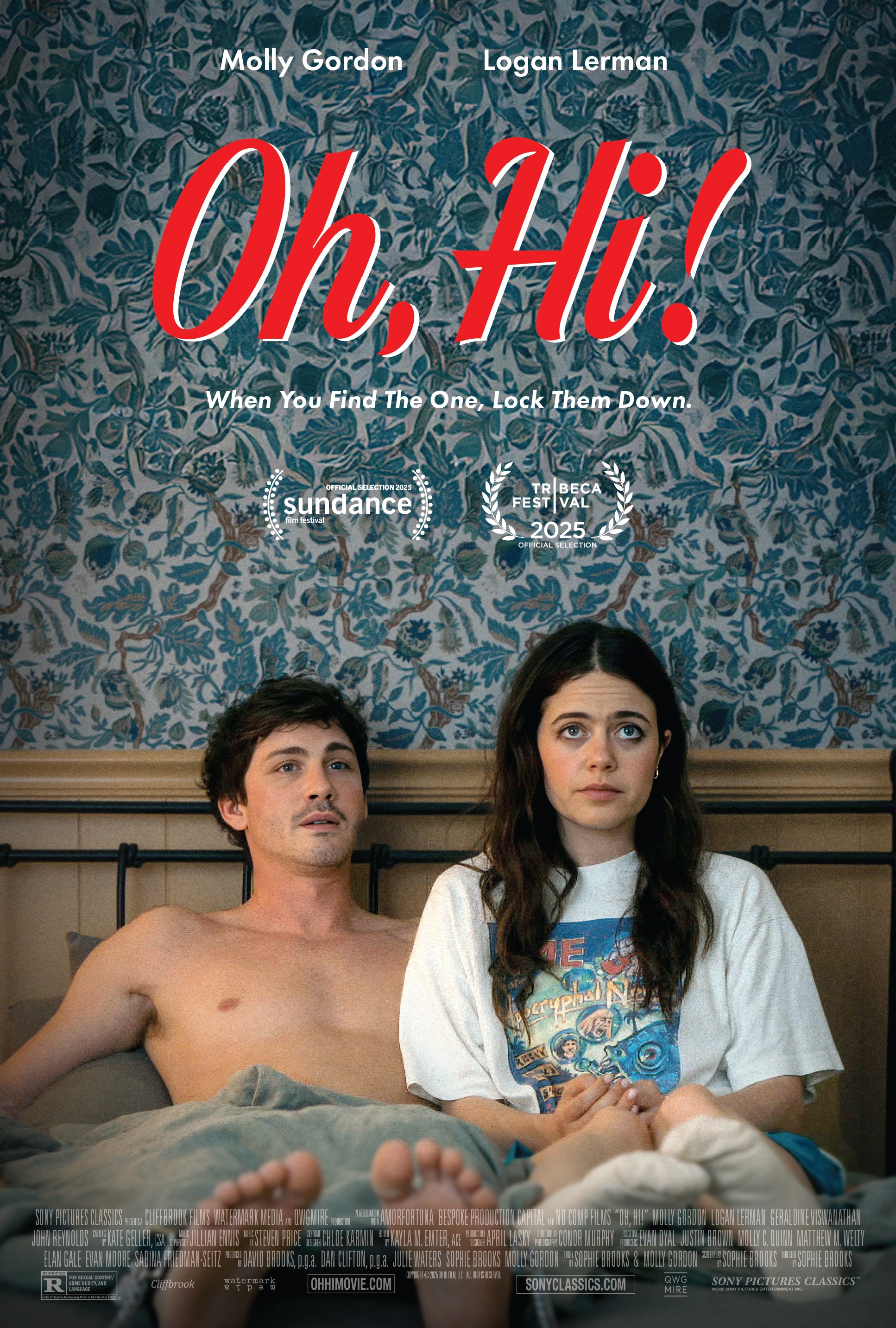
It hadn’t occurred to me the missing niche that this film filled in my life, but never have I so accurately seen my-aged adults in the current time period so accurately portrayed. Oh, Hi! is a romcom about a new couple with very different views of their relationship, leading to Iris (Molly Gordon) leaving Isaac (Logan Lerman) handcuffed to the bed of their rental house during a weekend getaway. She eventually calls her best friend Max (Geraldine Viswanathan) and her boyfriend Kenny (John Reynolds) to help her figure out what to do next.
Though it gets muddled at times, the film is fun and silly and a solid watch. At times, it’s entrenched in its genre and at others, it’s doing something fairly subversive. There’s this scene early in the film where Iris and Isaac are discussing movies—which has you raising an eyebrow at the idea they’ve been dating for four months—that eventually returns in a predictable joke at the end of the film but one that hits anyway with the delivery and succinct writing. The film strikes this balance, which makes it feel both familiar and a bit out there, complemented by the performances of Gordon, Viswanathan, and Reynolds.
At times, the goofiness works more than the emotional core. Namely, the characters turning to witchcraft (hilarious, relatable) felt somehow more coherent than the culmination of anxieties at the center of Iris and Isaac’s relationship. This makes the film succeed in its humor but a bit unrealized in other ways. But this is a great watch for any occasion on which you’d usually watch a fun romcom—over snacks and cocktails, perhaps.
Sunday, 15 March 2026
The Iron Claw (2023, dir. Sean Durkin)
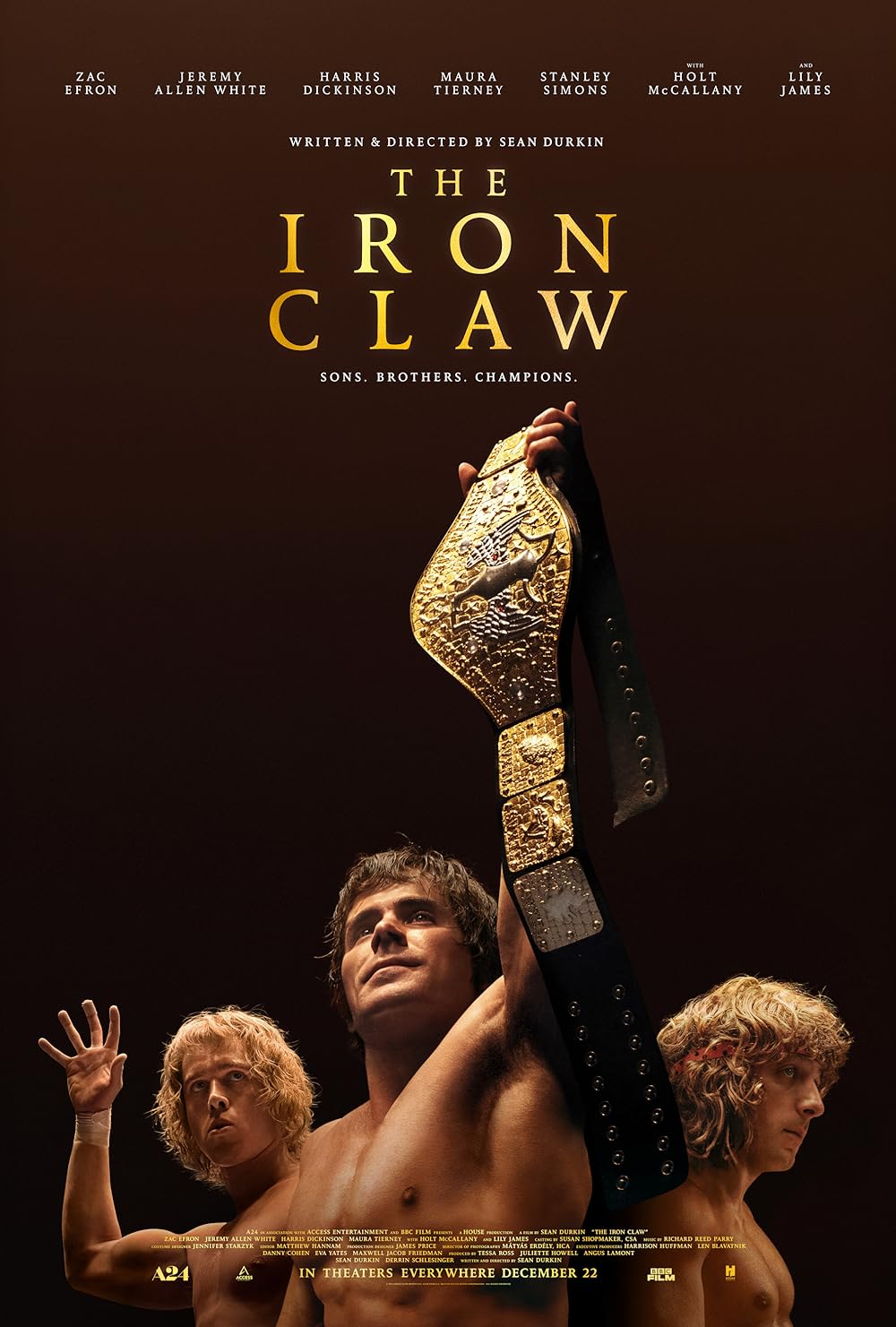
The Iron Claw is a biographical sports drama about the Von Erich family of professional wrestlers. It primarily follows the second-oldest son Kevin (Zac Efron) and his brothers Kerry (Jeremy Allen White), David (Harris Dickinson), and Mike (Stanley Simons), exploring their relationships with each other, wrestling, and their father Fritz (Holt McCallany).
This is a movie I have attempted to watch many times because I know it will be rewarding, but it demands a particular sort of attention from me. It’s slow and dramatic and, after a certain point, just an inundating tragedy. There is much to praise about this movie but I want to highlight the casting and performances, which were brilliant. This movie does such an excellent job creating a particular mood, much of which is created by the performances. They are weighty before you know why: a heaviness in both style of acting and every other aspect of the production. This means the tone stays relatively consistent throughout the film, even as tragedies amass. It speaks to ideas in the dialogue of curses and creates a feeling of the ending at the beginning.
All that said: I’m glad I watched it, but I’m not sure if I would again. There is a reason it took me a couple tries to get into this film and while it is a very good film and equally rewarding, it can be a hard watch at times. This is due to that amazing mood and pacing, which are ultimately some of the many strong points of the film but contrary to what I typically find myself in the mood for.
Saturday, 14 March 2026
Little Women (2019, dir. Greta Gerwig)
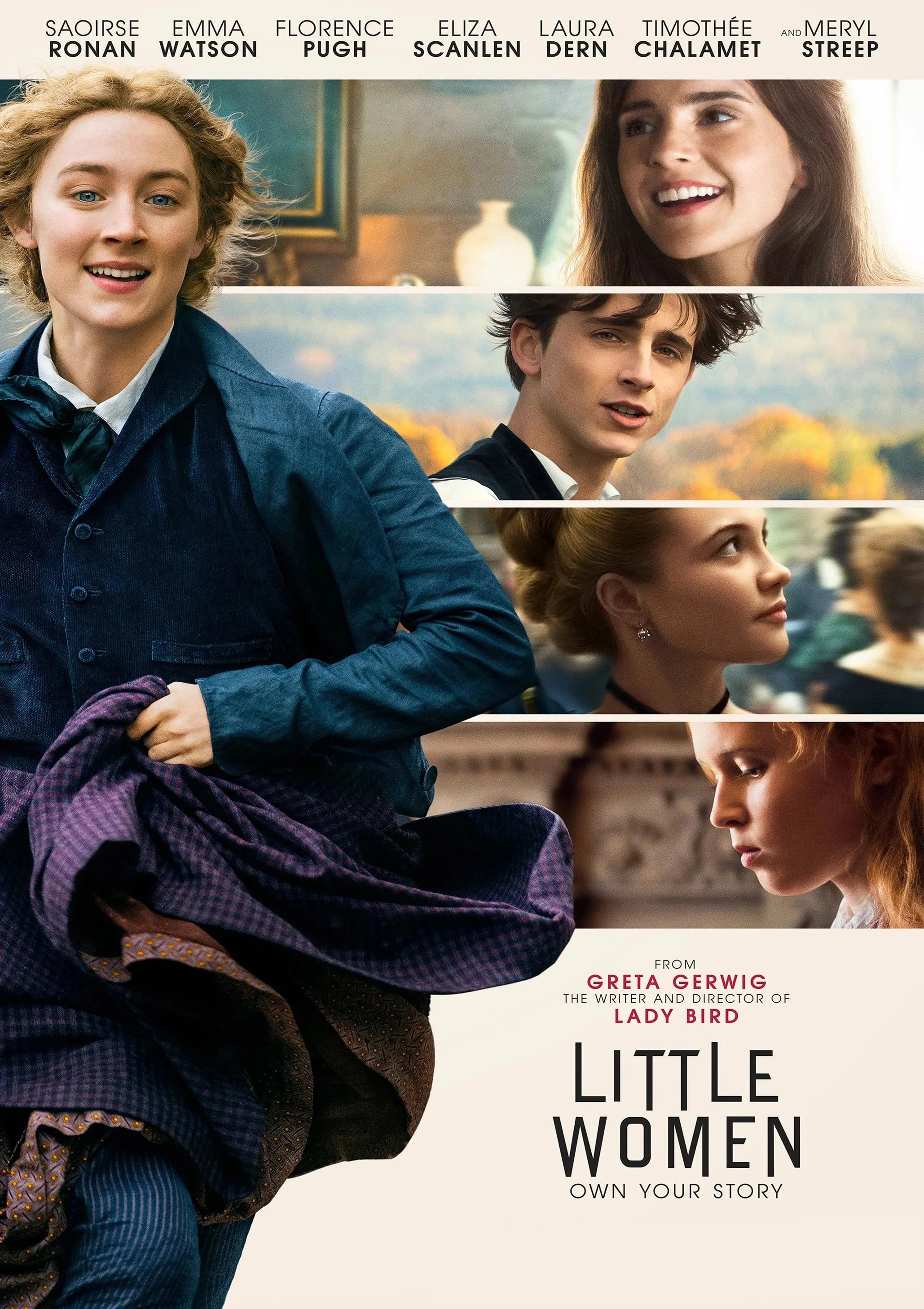
Greta Gerwig’s Little Women is one of those films that everyone I know is constantly shocked I haven’t seen. It has strong women characters, it’s a period drama, it has stunning costumes—but the truth? I have an aversion to the story due to a particular childhood experience with the book. It’s silly, yes, but the content of the story itself has done little to convince me to give it another try. But despite this massive hurdle, the skillful execution of this book to film adaptation managed to get me on its side.
Little Women is a film adaptation of an 1868 novel of the same name, which follows the four March sisters—Meg (Emma Watson), Jo (Saoirse Ronan), Beth (Eliza Scanlen), and Amy (Florence Pugh). As their father fights in the American Civil War, they are raised by their mother (Laura Dern), and occasionally interact with their Aunt March (Meryl Streep), neighbor Mr. Laurence (Chris Cooper), and his grandson Laurie (Timothée Chalamet). The plot deals heavily with the themes of marriage, family and community, and places in society contrasted with personal ambition.
It’s structured as a series of vignettes switching between two major time periods seven years apart. This choice keeps us at a slight distance from the characters, but not a distracting one—we can understand their personal changes through their dynamics more frequently than individual choices, emphasizing the March sister’s relationships to each other and the people they are close to. It also serves to emphasize the main themes without feeling egregious or overwhelming.
Alongside strong performances, remarkably accurate capturing of the book’s mood (at least a quarter of which is thanks to Laura Dern), and (yes) seriously stunning costumes, that’s one of the huge strong suits of the film: using the themes to orient the vignettes, and in turn using the vignettes to come to a complicated and understanding view of these different women’s lives and choices.
I definitely liked this movie, but the more I write and think about it, the more fond of it I find myself. All the praise this film has received is absolutely warranted—it’s quite good.
Friday, 13 March 2026
The Bride! (2026, dir. Maggie Gyllenhaal)
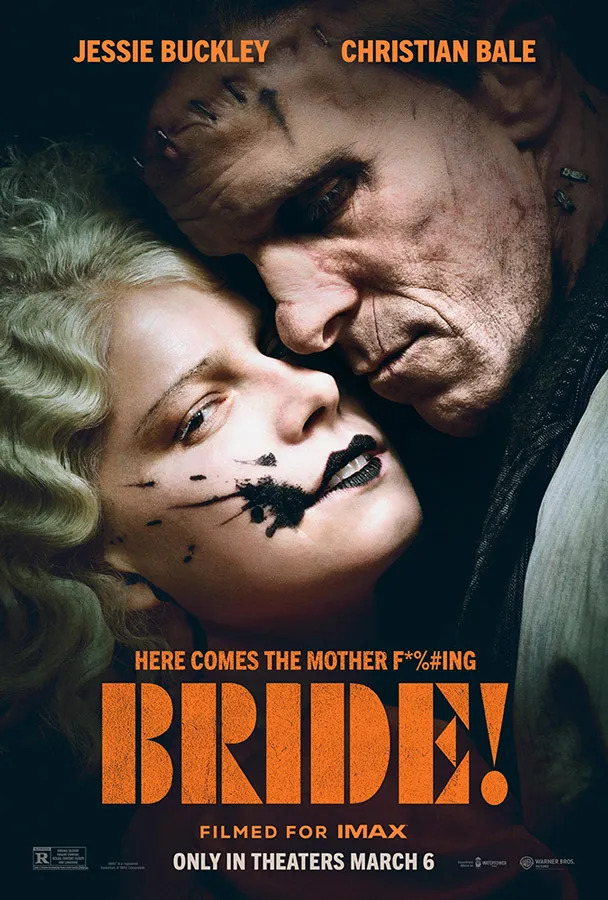
Maggie Gyllenhaal’s The Bride! was my most anticipated film of the first three months of the year—I’m a huge Frankenstein fan, absolutely enamored by the trailers, and so impressed by Jessie Buckley every time I’ve seen her. The film was advertised as a gothic romance between the creature and his bride, set in the 1930s—it seemed like something of a Bonnie and Clyde thing. While this is more or less true, it definitely leaves out a lot of details. This film has an electric energy, balancing rage and fun and love for the legacy of Frankenstein film adaptations—but it’s also patched together with homages and references to different film adaptations as well as its own ideas, far too many concepts to fit in coherently. Bursting at the seams, if you will. The imagery I’m invoking here is not accidental—I highly doubt I’m the first to make this joke, nor will I be the last.
In an homage to the frame narrative of the 1935 Bride of Frankenstein directed by James Whale, the film opens with a black and white vignette of Mary Shelley, portrayed by Jessie Buckley, who explains an unrealized idea following her famous novel, and her impending possession of a woman in a restaurant in Chicago associated with the mob named Ida (Jessie Buckley). Ida, battling the consciousness of Mary, winds up dead, but is soon reanimated (ghost in tow) by the lovelorn Frank (Christian Bale)—he took his father’s name, clearly—and Dr. Cornelia Euphronius (Annette Bening).
So already we’re working with a lot of concepts: an adversarial authorial possession; an alternative history in which the events of the story of Frankenstein really occurred; the mob; 1930s Chicago backdrop; a woman who is reanimated, possessed, and amnesiac; and an engagement to the movie-loving creature. Then you start to add the actual plot of the film: the mobs and general public defined against these monsters; the detective duo Jake Wiles (Peter Skarsgaard) and Myrna Malloy (Penélope Cruz) trying to solve a string of murders and crime and, to a lesser extent, battle sexism in the workplace; the mob, only more; a women’s movement to dress as Penelope (the reanimated Ida-Mary’s temporary name) and trash cars and stuff. I think I’ve made my point.
The thing is, any (or many) of these elements could make for an interesting movie, but the way they played out was complicated and messy—to the film’s detriment. The bit about the Mary Shelley possession was basically dropped a little over halfway through the movie, and it, like the rest of these details, culminated in the finale in a way that was entirely underwhelming. That said, I’m going to vastly prefer a movie like this, which is full of ideas and ambition, over something that plays it safe to the point of saying nothing at all.
Ideas aside, the film itself is skilled in just about every way besides the writing and directing, with stunning production design, strong performances (some more than others), and killer music. It just doesn’t manage to tie that together. The best example of this is the main character’s, like, third renaming at the climax of the movie, which is doing so much in terms of significance and is almost incoherent. And similarly it is clear in the fact that there is a dance number thematically relevant to Frank’s whole conflict (the dance was great, by the way) but I haven’t even touched on and don’t need to.Although this movie was not at all what I wanted it to be, it was a truly fun watch with the high energy and brilliant visuals. It also reinvigorated my love for the art of adaptations, acting as a response, in this case, to nearly a century of film history and still wanting to say something novel amidst this record. I know the onslaught of remakes can be fatiguing—more so when they offer little in the way of substance—and this film, while messy, is a strong example that there are new ideas and perspectives to be found within them.
Wednesday, 11 March 2026
Hamnet (2025, dir. Chloé Zhao)
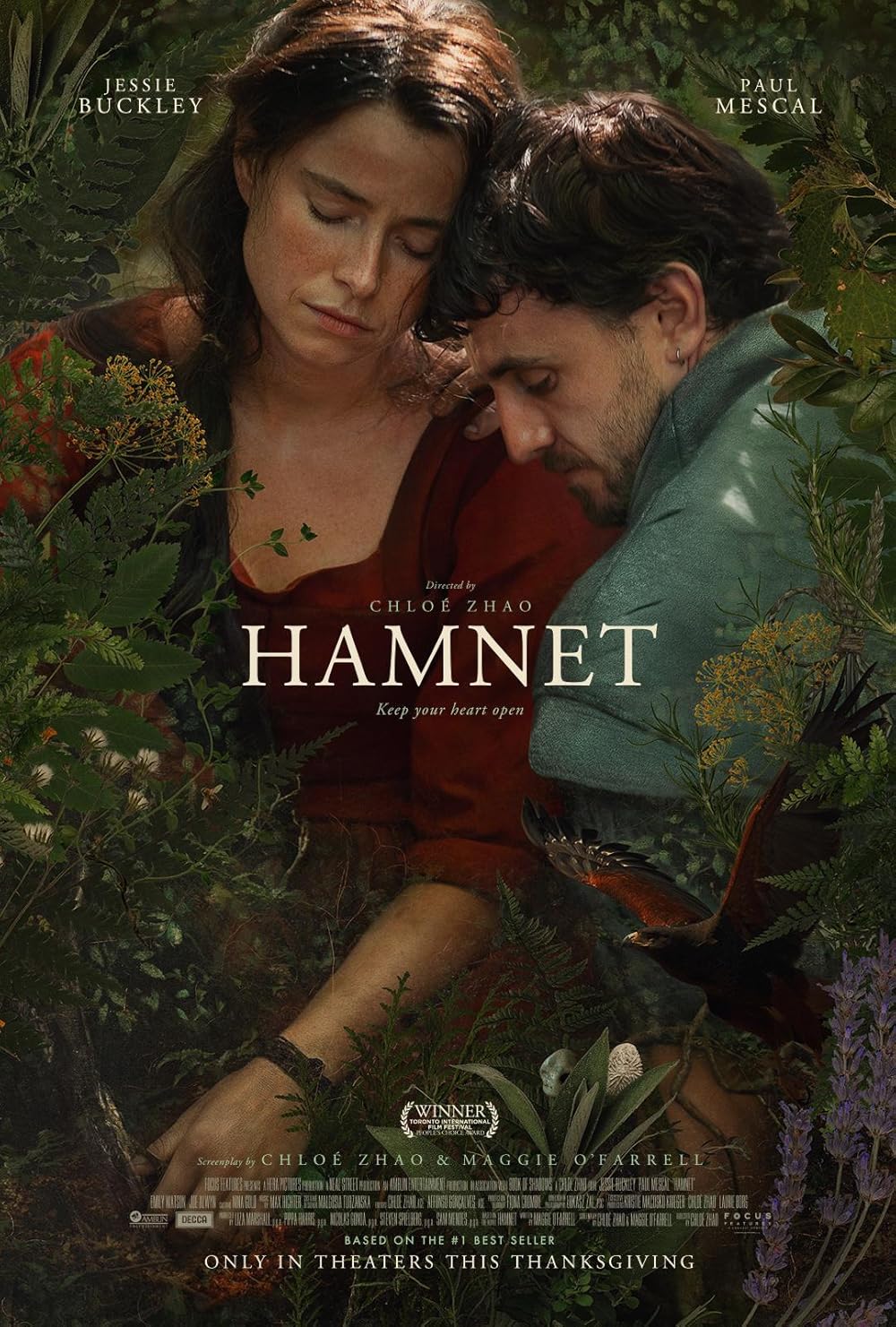
Hamnet is a period drama film based on a novel of the same name (usually) by Maggie O’Farrell, that imagines the family of William Shakespeare and Anne Hathaway, in part centered around the death of their son Hamnet. It begins with their courtship: the strange Agnes (Jesse Buckley) is connected to the forest, rumored of being the daughter of a witch, and indeed she has knowledge of plants and herbs that is useful in her life, and then she meets Will (Paul Mescal), a tutor working to pay off his father’s debt and skilled with a pen. Despite their respective families’ disapproval, the two marry and have a child. Although Will spends much of his time in London, Agnes gives birth to a set of twins. The children grow up some, until their son Hamnet (Jacobi Jupe) falls ill and dies. Agnes and Will cope with his death, Will largely doing so in writing his famous play Hamlet.
I’m giving a sort of stoic overview here, but this is a drama through and through. So much weight is put on the characters emotions and reactions to their world—primarily Jesse Buckley’s Agnes who, if you’ve somehow missed it, delivered a truly moving performance. She has this posture in the film (present elsewhere, but Buckley is doing the most) that makes her feel unworldly and you start to understand that strangeness other characters express. She wears red throughout the movie and Will blue, a choice that occasionally borders on frustrating, but allows Buckley to capture the attention of the stunning cinematography and set design.
There’s something about the film that betrays its literary basis in O’Farrell’s 2020 novel, a cohesion to the imagery that somehow reads as originating in a book rather than film. I’m just guessing about this, by the way—either way, it’s responding to a major literary and theatrical figure and doing so with appropriate use of imagery. I was briefly worried about how this would play out, but it wraps up in a beautiful and satisfying way, a truth I’m relieved to share.
Finally, I’m happy to report that the film’s Wikipedia entry has been edited from calling the film a “biographical period drama” to a “historical drama” since the day I saw it, as I use the word “imagines” with great weight. Way back when I started this website, I reviewed a couple of shows that deliberately added fantastic elements to specific historic figures and moments. This film is not quite at that level—turning early modern political struggles into shapeshifter stories or forcing mid-century television chefs into espionage—but it certainly takes liberties. Importantly, too, it takes a figure with a lot of baggage in terms of historical and modern views of the past and makes him "Will” to Agnes, who we spend most of the film with. In avoidance of this becoming a lecture, I’ll say that the film balances that imagination with a realism in the story’s drama, although I suspect this might also have something to do with the novel.
At the end of the day, this film boasts an excellent story with a beautiful execution in every way. It clearly started with strong bones, but Zhao absolutely delivered with this adaptation.
Monday, 9 March 2026
Marty Supreme (2025, dir. Josh Safdie)
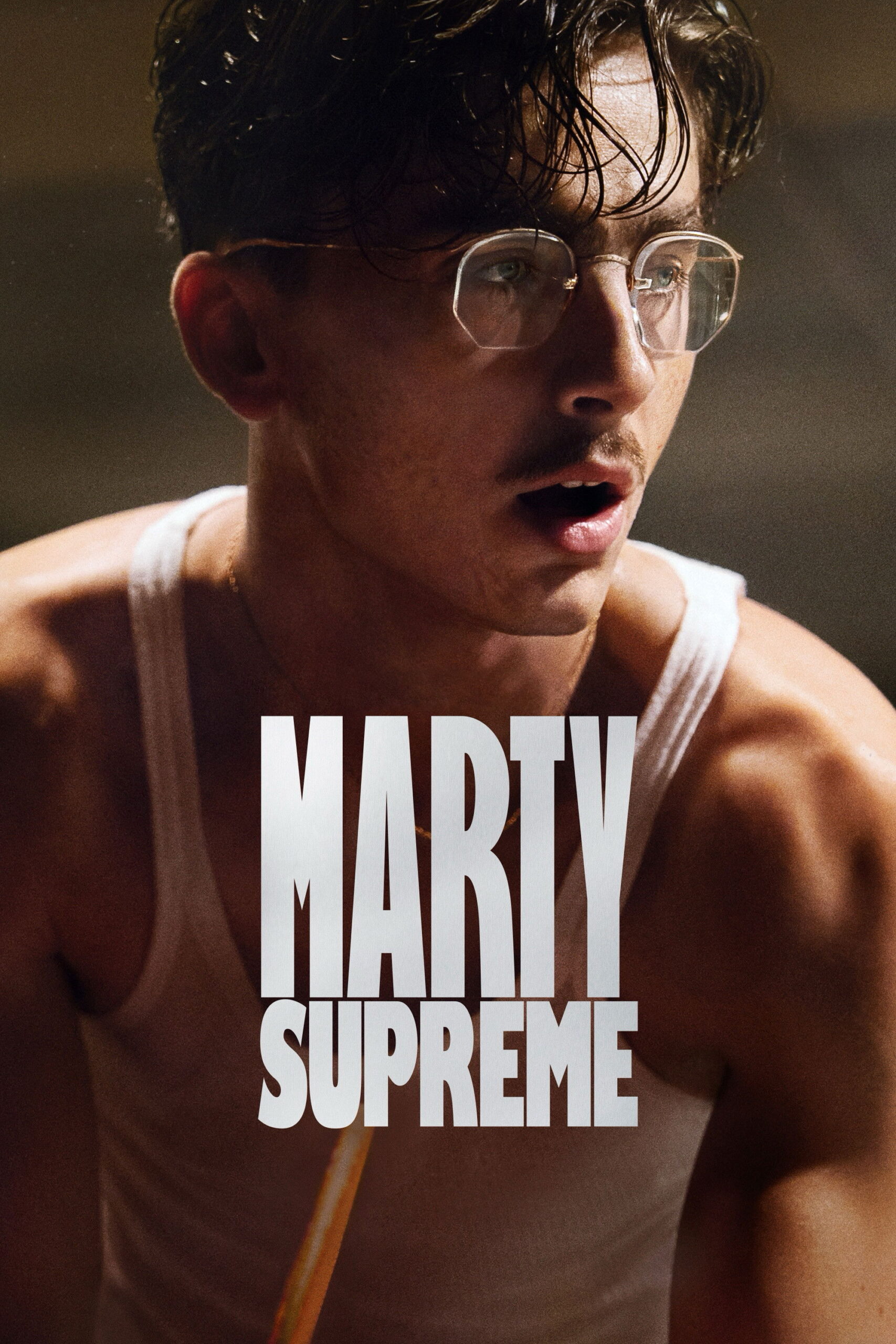
There are certain movies which cause me such anxiety to watch and in most cases, this is enough to turn me off a movie forever. However, this film manages to surpass that initial impulse, making my anxiety watching it a worthwhile part of the experience.
Marty Supreme is ostensibly a sports comedy-drama that follows table tennis player Marty Mauser (Timothée Chalamet), who will do just about anything to become a world champion. The movie begins and ends with table tennis, first at the British Open and later at the World Championship in Tokyo, but the entire middle is back in New York, as Marty attempts to find a way to pay off his debt from London and for his ticket to Tokyo. There are a handful of other characters who guide Marty’s journey—his lover and mother-to-be Rachel Mizler (Odessa A’zion), retired actress with whom Mary flirts Kay Stone (Gwyneth Paltrow), Kay's husband with an interest in Marty’s career Milton Rockwell (Kevin O’Leary), taxi driver and friend Wally (Tyler Okonma). The list goes on, quite extensively.
I mention the cast to highlight my first point of praise for this film: absolutely excellent character work. This movie does not shy away from having immediately interesting characters who you would, to be frank, rather spend the movie with than Marty. It makes the world feel lived in and emphasizes the nature and effects of Marty’s behavior. That brings us into the structure of this film, which takes a major break from the table tennis to focus on Marty’s time in New York. It’s still present, but it’s not the crux of what’s happening, focusing instead on car chases, shootouts and fights, and affairs. It’s completely unexpected for a sports movie. While it does occasionally feel like whiplash, there’s a cohesion to the series of events that I appreciated.
This is a movie about pride and the places it takes its main character Marty. It’s absolutely great in so many ways—the performances, the costumes and set design, the editing and music, the lighting and cinematography. Just know you are in for an absolutely wild ride.